
Look Beyond the Salmon: Why Mango Salsa Led Me to Sauvignon Blanc
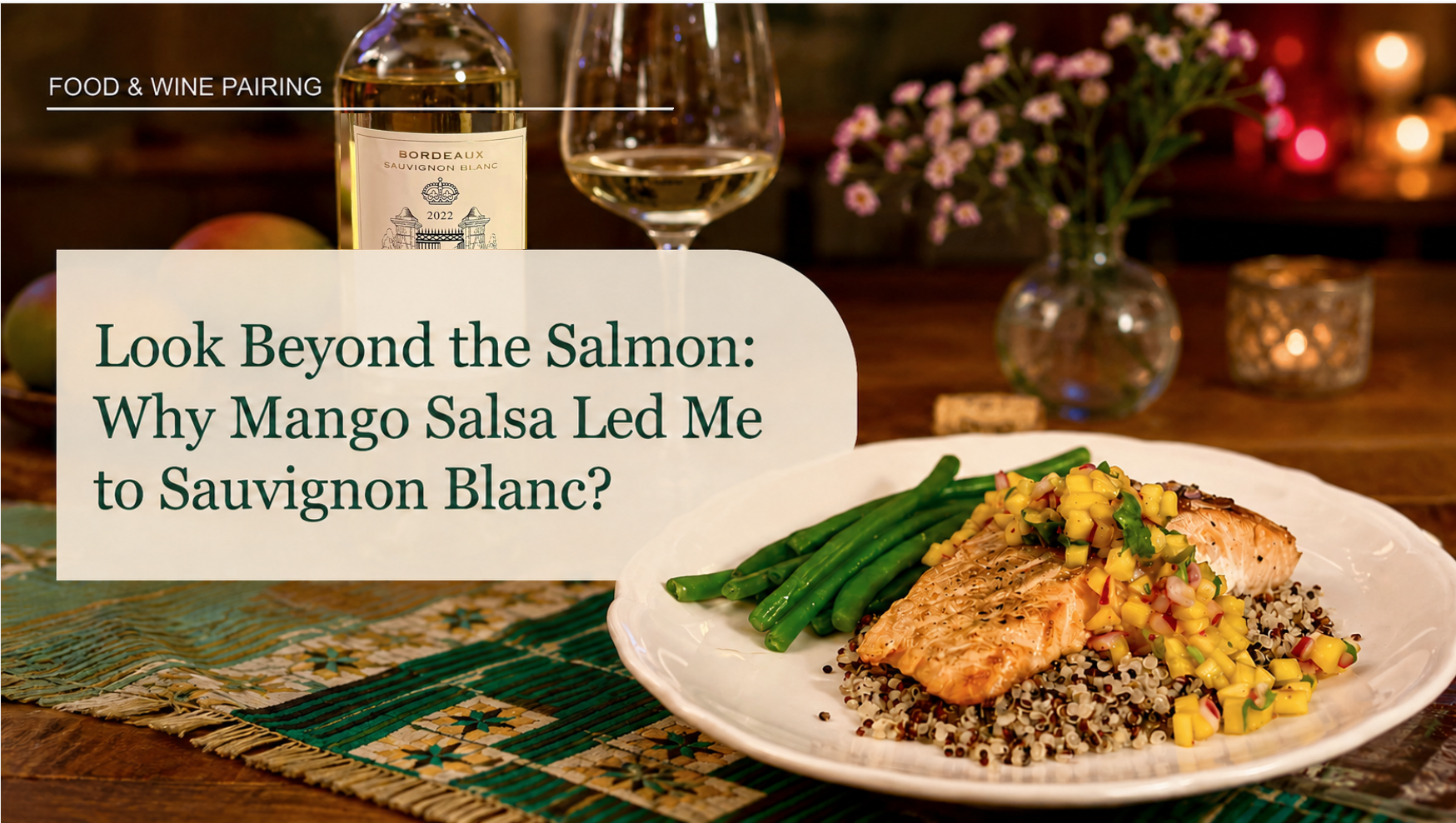
Pan-seared salmon with mango salsa, quinoa and green beans paired with 2022 Château Greysac Le Blanc de Greysac Sauvignon Blanc | Photo credit: Joyce Lin
The salmon was the star of the plate, but it wasn’t the only ingredient that decided the wine
Last night, my hubby made us a quick supper for two: pan-seared salmon served over quinoa with green beans and a generous spoonful of mango salsa. It was colorful, fresh, and exactly the kind of meal that makes an ordinary evening feel quietly special.
Salmon often sends wine lovers directly toward Chardonnay—and with good reason. A creamy, textured white can be a beautiful match for its richness. But I was not pairing wine with the salmon alone. The mango salsa brought sweetness, citrus-like acidity, fresh herbs, and gentle spice. Suddenly, the entire plate was asking for something brighter.
I opened the 2022 Château Greysac “Le Blanc de Greysac,” a Bordeaux Blanc made from 100% Sauvignon Blanc.
Sauvignon Blanc in the Vineyard
Sauvignon Blanc is a naturally vigorous vine. Left unchecked, it can produce a dense canopy of leaves that shades the grapes and encourages distinctly green flavors. Vineyard management therefore plays an important role in shaping what eventually appears in the glass.
Grapes grown with more shade tend to show grassy, green-pepper, and herbal characteristics. Greater sunlight encourages riper citrus and tropical-fruit expression.
The variety buds relatively late and ripens early, making it well suited to cool and moderate climates, such as Sancerre and Pouilly-Fumé in the Loire Valley, Bordeaux, Marlborough in New Zealand, South Africa’s Stellenbosch, and Chile’s Casablanca and Leyda Valleys.
Sauvignon Blanc is also vulnerable to powdery mildew, botrytis bunch rot, and certain vine-trunk diseases. Its lively personality in the glass is therefore the result of considerable care in the vineyard.
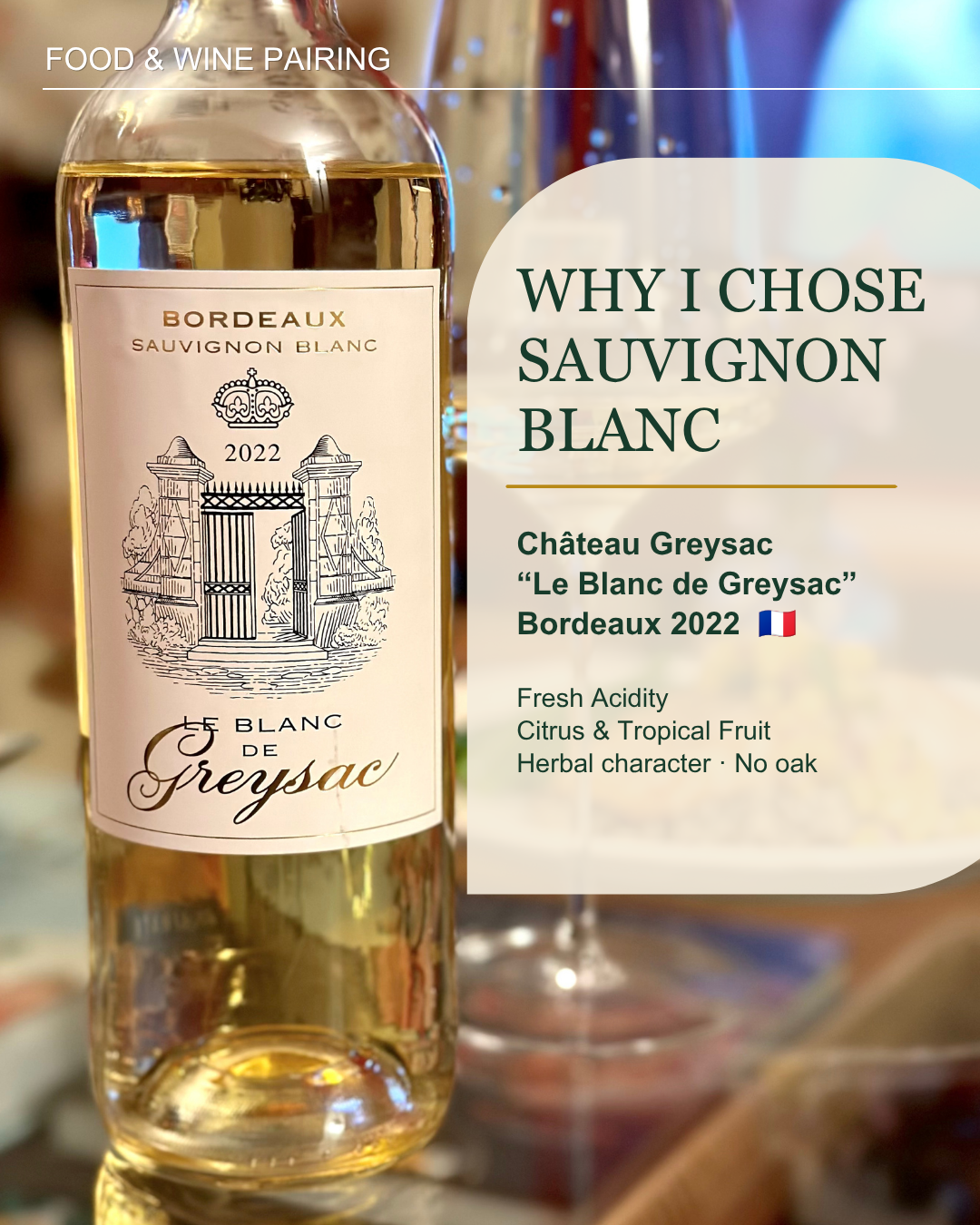
2022 Château Greysac “Le Blanc de Greysac | Photo credit: Joyce Lin
Sauvignon Blanc in the Glass
At its most recognizable, Sauvignon Blanc is dry, aromatic, and wonderfully refreshing. Cooler expressions may suggest grapefruit, green apple, gooseberry, fresh grass, asparagus, or wet stone. In warmer conditions or when the grapes receive more sunlight, the profile can move toward passion fruit and other tropical flavors.
Most examples have high acidity, medium body, and moderate alcohol. Stainless-steel fermentation often preserves the grape’s pure fruit and herbal aromas, while oak can create a broader, more textured style with hints of spice or smoke.
Because Sauvignon Blanc ripens late and maintains high acidity, it can serve as an excellent base for botrytized sweet wines when conditions favor noble rot development. This versatility is most famously expressed in Sauternes, where it is often blended with Sémillon and Muscadelle to create complex, layered wines marked by dried fruit, orange marmalade, ginger, warm spices, and sometimes a hint of saffron, all carried by a fine balancing acidity and a long, lingering finish.
A similar expression appears in Barsac, where Sauvignon Blanc contributes its hallmark freshness, aromatic lift, and citrus-driven precision. It counterbalances the richness and viscosity created by noble rot while enhancing the wine’s overall vibrancy and structural elegance.
The Le Blanc de Greysac was made in temperature-controlled stainless-steel tanks from fruit grown on selected clay-limestone parcels. Its citrus, green-apple, subtle mineral, and herbal qualities were exactly what this dinner needed.
Why the Pairing Worked
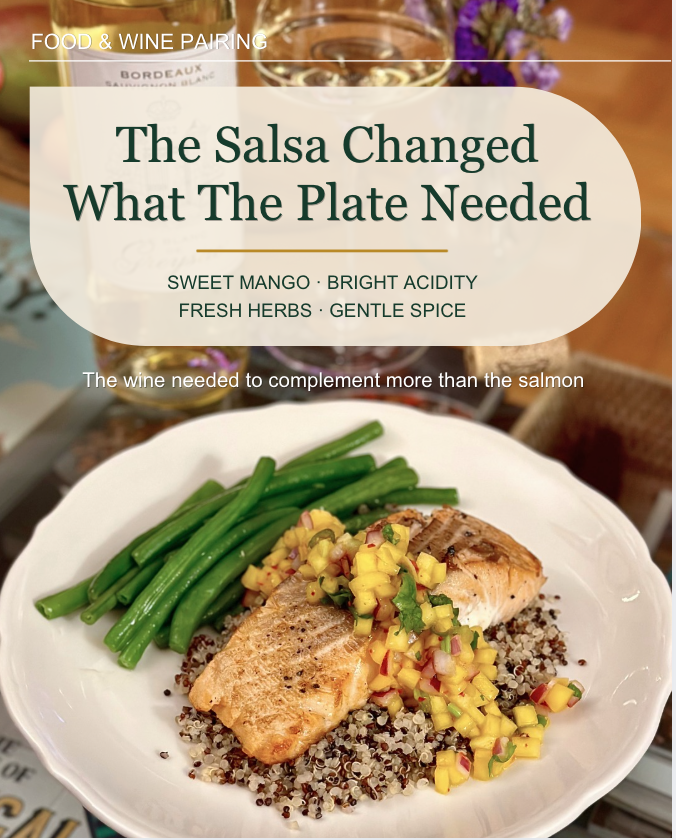
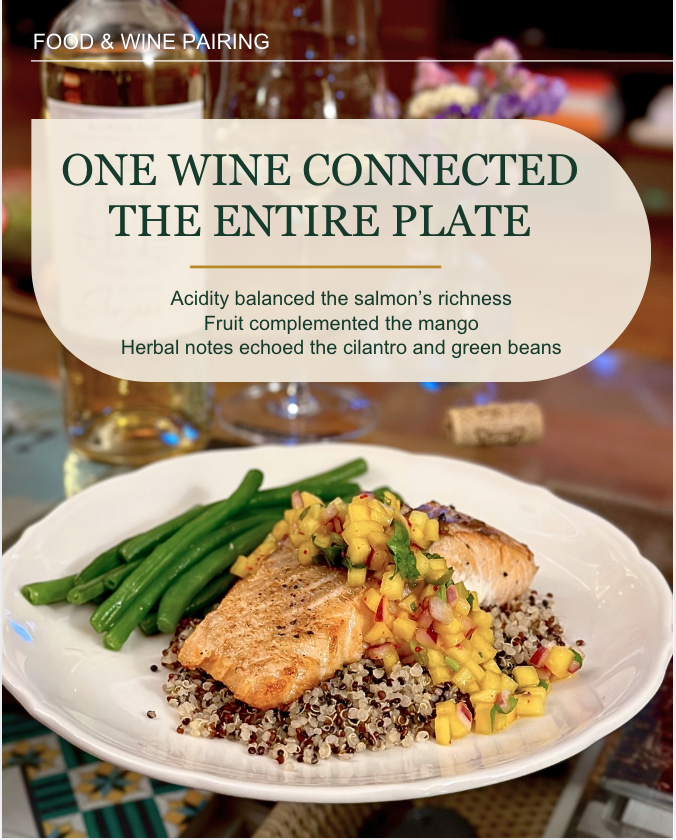
The wine’s lively acidity met the salmon’s richness like a squeeze of fresh lime. Each sip refreshed the palate, allowing the next bite of fish to feel as inviting as the first.
Its citrus and green-fruit flavors defined the mango without adding more sweetness. At the same time, Sauvignon Blanc’s herbaceous character created a natural bridge to the cilantro in the salsa and the green beans beside the fish. Even the quinoa benefited, absorbing the bright flavors and bringing the different elements together.
That was the beauty of the pairing: the wine did not simply sit beside the salmon. It wove through the entire plate. The fish tasted lighter, the salsa became more vibrant, and the green beans stopped feeling like an unrelated side dish.
One caution is worth remembering. If mango salsa becomes overly sweet, a dry Sauvignon Blanc can seem lean or sharp in comparison. Plenty of lime or another citrus element, fresh herbs, savory seasoning, and restrained sweetness will keep the pairing balanced.
The Clue May Be in the Sauce
The most useful wine-pairing lesson from this meal is not simply that Sauvignon Blanc works with salmon. It is that the main ingredient rarely tells the whole story.
Before choosing a bottle, pause and ask what the sauce, salsa, or seasoning contributes. Is it sweet, acidic, herbal, creamy, smoky, or spicy? Those surrounding flavors may influence the pairing more than the protein at the center of the plate.
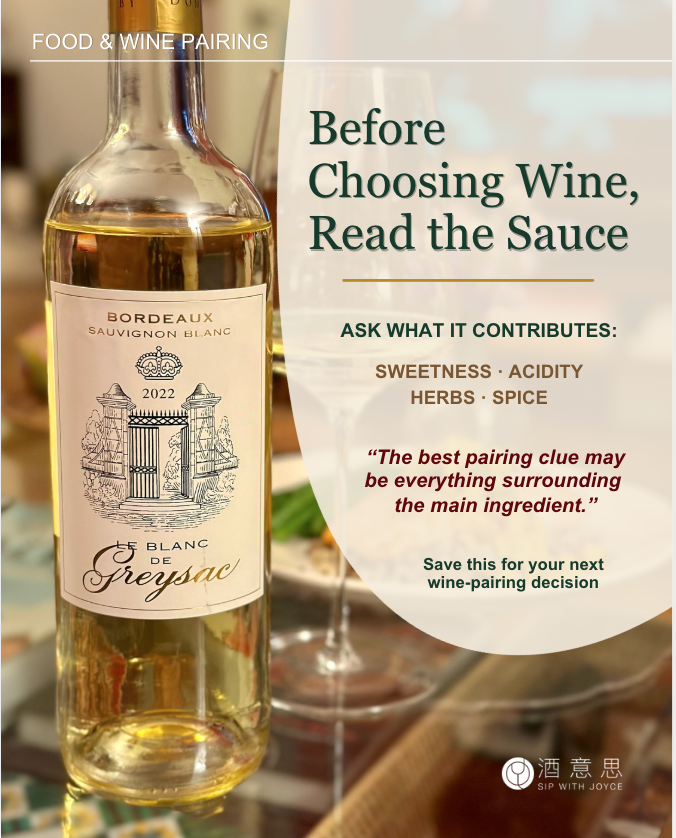
The best pairing clue may not be the main ingredient, but everything surrounding it.
Once you begin reading a dish this way, wine pairing becomes less about memorizing rules and more about recognizing relationships.
Sometimes, the ingredient that appears to be playing a supporting role- the bright spoonful of salsa beside the salmon- is quietly leading you toward the perfect glass.