
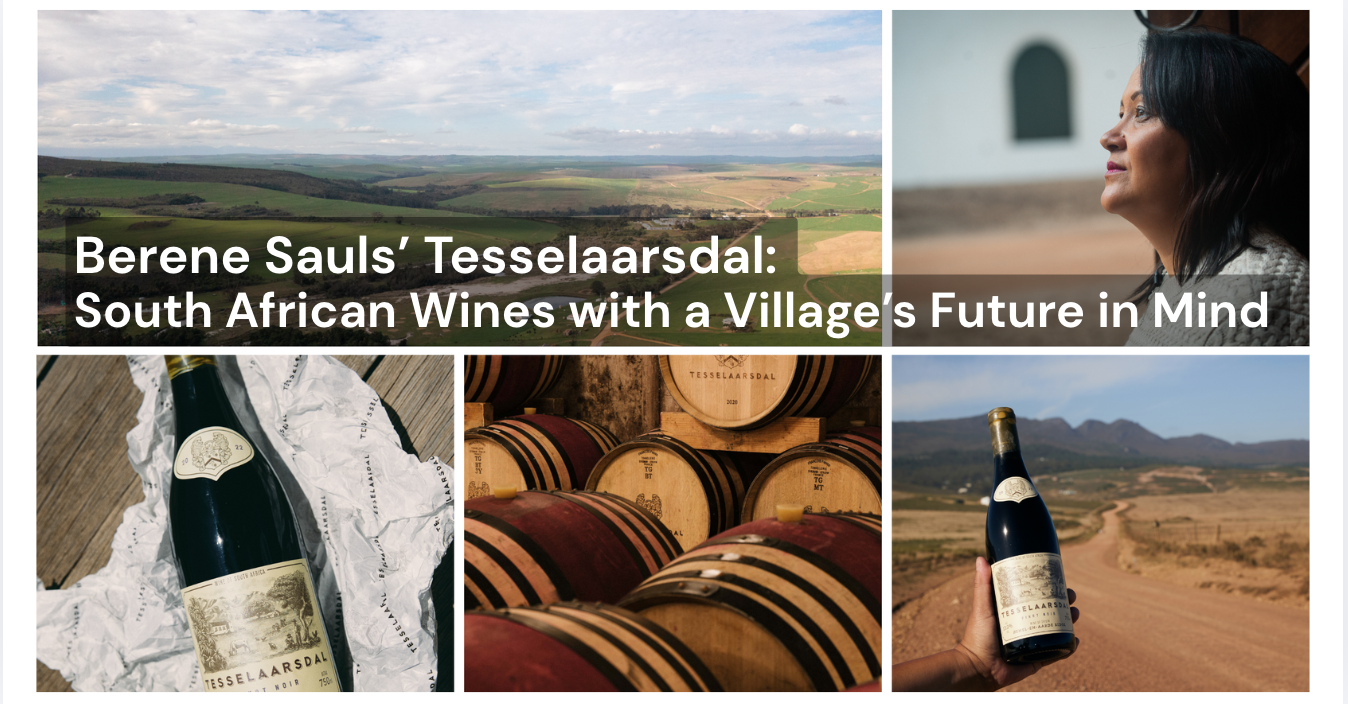
Tesselaarsdal Wines: Berene Sauls’ Vision for South African Wine
The South African founder of Tesselaarsdal Wines, Berene Sauls, discusses her elegant Chardonnay and Pinot Noir and her ambition to establish a family vineyard near the village where she grew up.
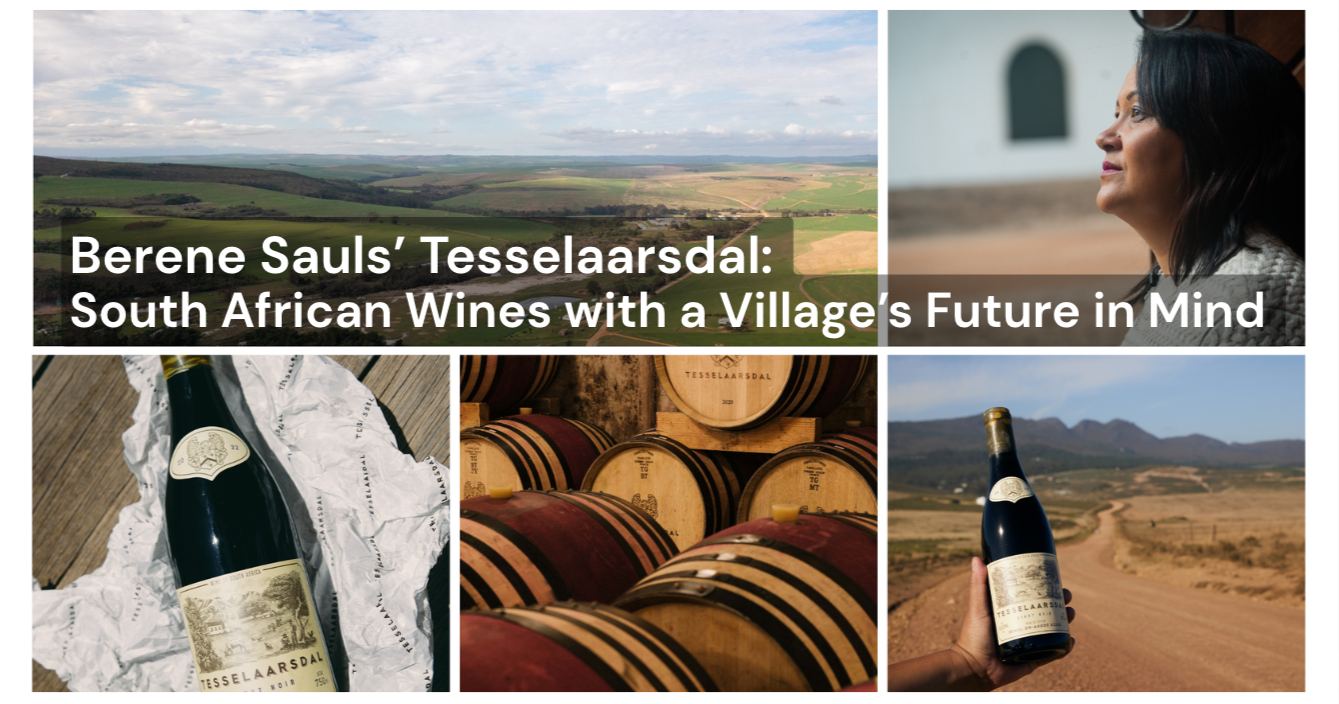
After building a wine business known for elegant Pinot Noir and Chardonnay, South African producer Berene Sauls is planting vineyards in her home village with ambitions that reach beyond her own bottles
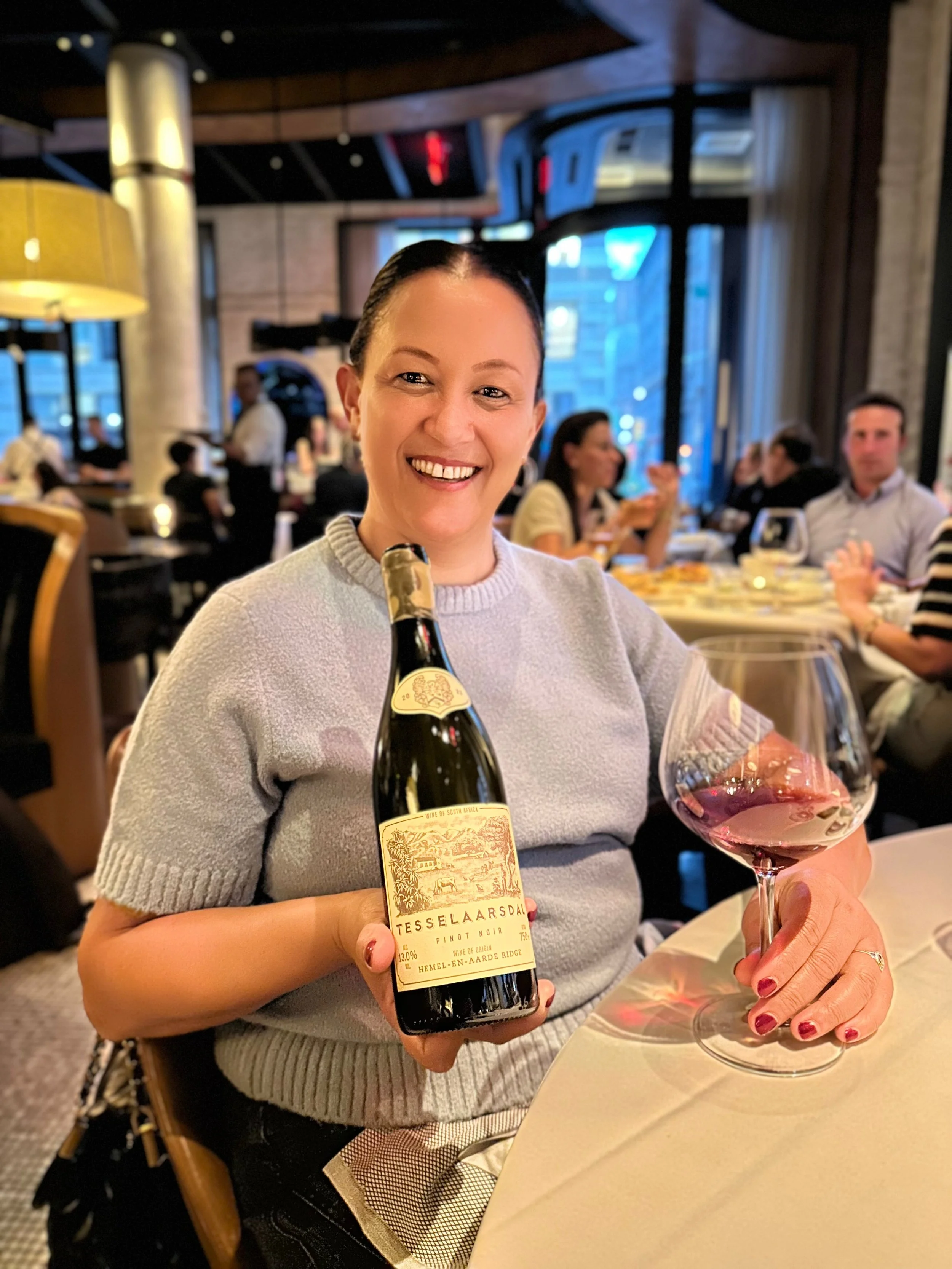
Berene Sauls, the owner of Tseeelaarsdal. Photo Credit: Joyce Lin
Berene Sauls began her career at Hamilton Russell Vineyards as an au pair at 19. Today, she owns Tesselaarsdal Wines, a South African producer of Pinot Noir and Chardonnay, and is developing a vineyard in the farming village where she grew up, Tesselaarsdal. She aims to build a family wine farm and encourage other growers to establish themselves nearby, bringing new opportunities to her community.
When I met her over dinner in New York in July, 2026, a few days before her birthday, we tasted Tesselaarsdal’s 2023 Chardonnay and Pinot Noir. Both struck me with their elegance and finesse. Through my interview with her, I came to understand how these wines fit into a much longer ambition.
Tesselaarsdal, the village that gives her wines their name, lies in South Africa’s Western Cape, about 135 kilometers from Cape Town, between Caledon and Stanford. It is part of the Overberg, an agricultural region east of Cape Town. The grapes for the wines we tasted came from the nearby Hemel-en-Aarde Ridge, a cool-climate wine-growing area inland from the coastal town of Hermanus.
Berene built Tesselaarsdal with grapes sourced from Hemel-en-Aarde Ridge. Now she is working toward making wine from her own land near her home village. For a business so closely tied to its founder’s roots, this would be a significant homecoming.
An Identity in The Glass
“Tesselaarsdal is more than just the name on your label,” I asked. “What do you hope consumers experience through your wines?”
Her answer linked the story’s honesty to the wine’s quality. She wanted people to discover beautiful cool-climate wines that faithfully reflect the Hemel-en-Aarde Ridge.
Asked what distinguishes the Hemel-en-Aarde Ridge, she described purity of fruit, freshness, and acidity. When I asked how she achieves the elegance and restraint associated with her wines, she again credited the quality of the cool-climate Pinot Noir and Chardonnay grapes.
The vineyard was central to each answer
The cellar work differs between the two varieties. The 2023 Chardonnay matured for five months, with 45 percent in amphora and 55 percent in neutral oak. The 2023 Pinot Noir underwent 10 percent whole-bunch fermentation, then spent nine and a half months in French oak barrels, 26 percent of which were new. Both wines were approximately 13.3 percent alcohol.
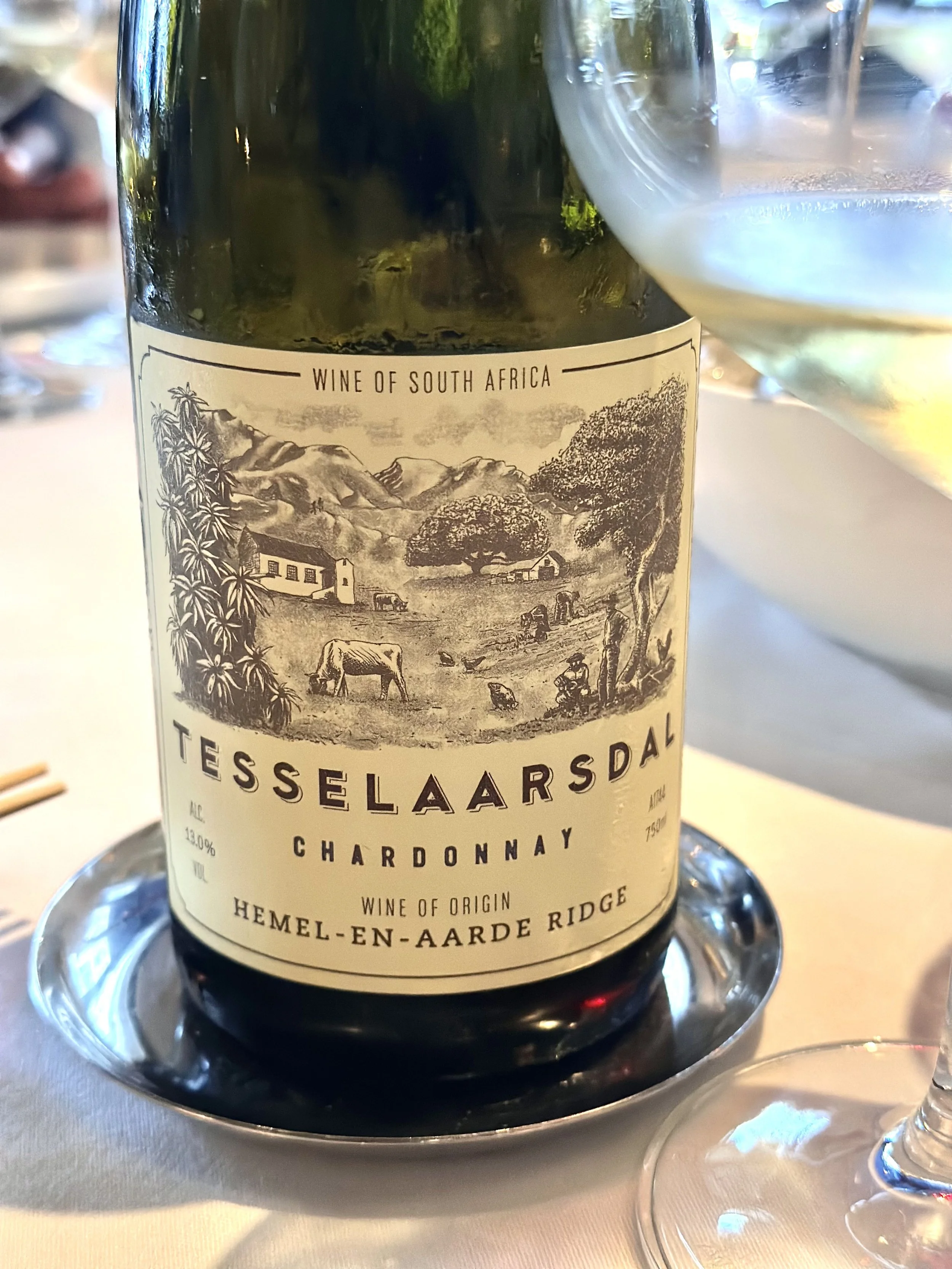
Photo Credit: Joyce Lin
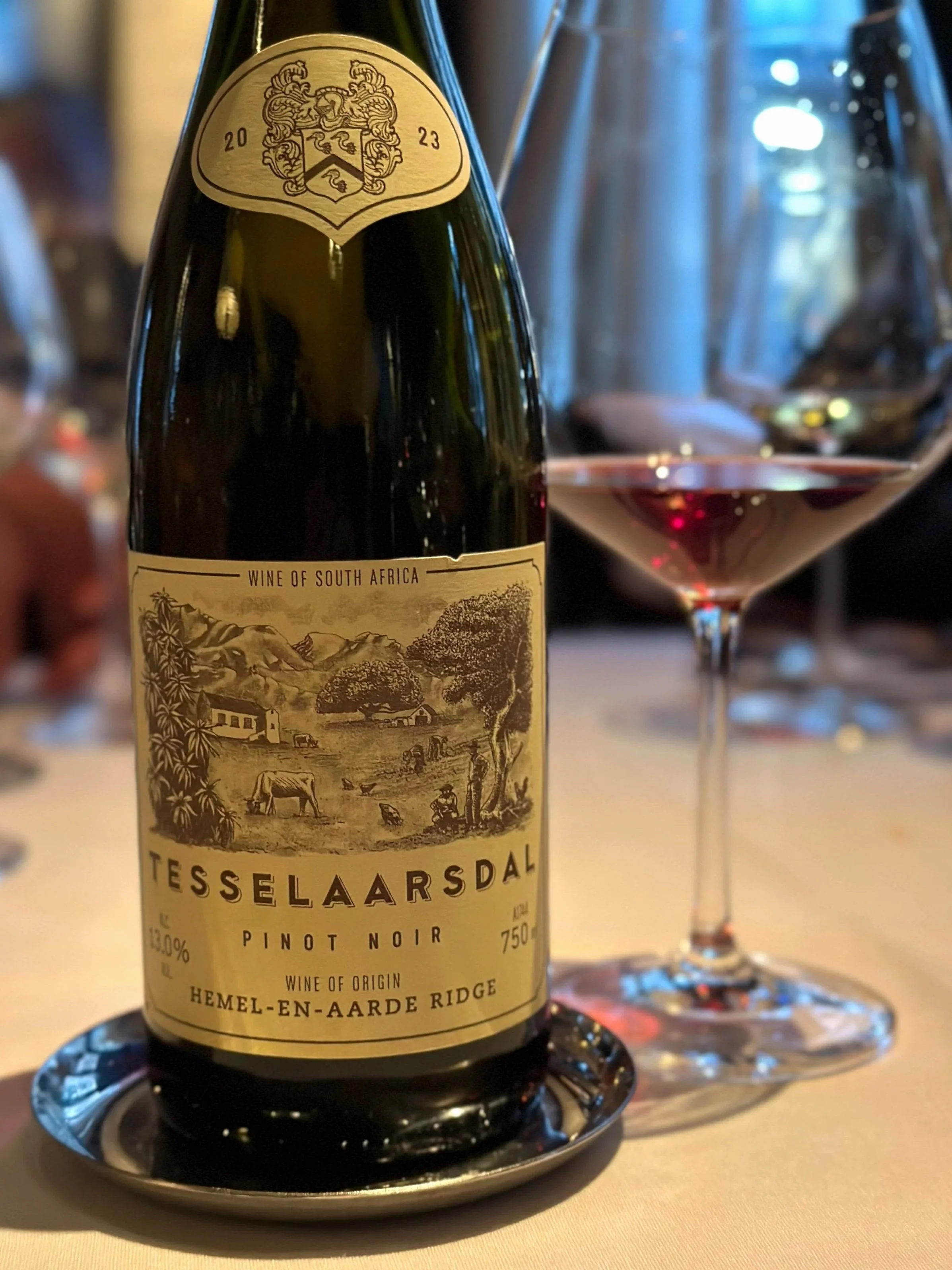
Photo Credit: Joyce Lin
I also wanted to know whether her preferences had evolved as Tesselaarsdal grew. Was she making the wines differently from her first vintages?
Berene described her approach as unchanged. Her answer suggested a clear commitment to the style she had set out to create: wines that express their origin with elegance and restraint.
That commitment will become especially compelling when she starts working with fruit from her home property. Her winemaking vision may be familiar, but the vineyard will give it its own character.
Finding Her Own Voice
Berene’s experience at Hamilton Russell gave her a thorough grounding in the wine business. After joining as an au pair in 2001, she moved into administration and became involved in exports, labeling and warehousing.
With Anthony Hamilton Russell’s support, she founded Tesselaarsdal in 2015. Working with the estate’s winemaker, Emul Ross, she produced her first wine, the 2015 Tesselaarsdal Pinot Noir, which was released in 2016.
I asked when she felt Tesselaarsdal had found its own voice.
She spoke warmly of Anthony’s generosity and sincerity, adding, “I have the utmost respect for him.” For Berene, Tesselaarsdal’s identity was already taking shape when it released its first wine in 2016. The positive reception in South Africa and abroad, including recognition from wine experts, gave her confidence to continue.
Running the business also revealed strengths she had not fully anticipated: managing her time efficiently and making decisions quickly. She was equally appreciative of the dependable team around her.
As Tesselaarsdal developed, her ambitions extended to owning a vineyard. That would mean taking on the work of establishing a farm and committing more deeply to the place that had inspired her wines.
Buying Land, Planting a Future
“Looking back, which decision had the greatest impact on shaping Tesselaarsdal’s development?” I asked.
She pointed to her purchase of 16 hectares of farmland just outside her home village of Tesselaarsdal in 2019. She bought the property outright, intending to plant Pinot Noir and establish a family wine farm for the next generation.
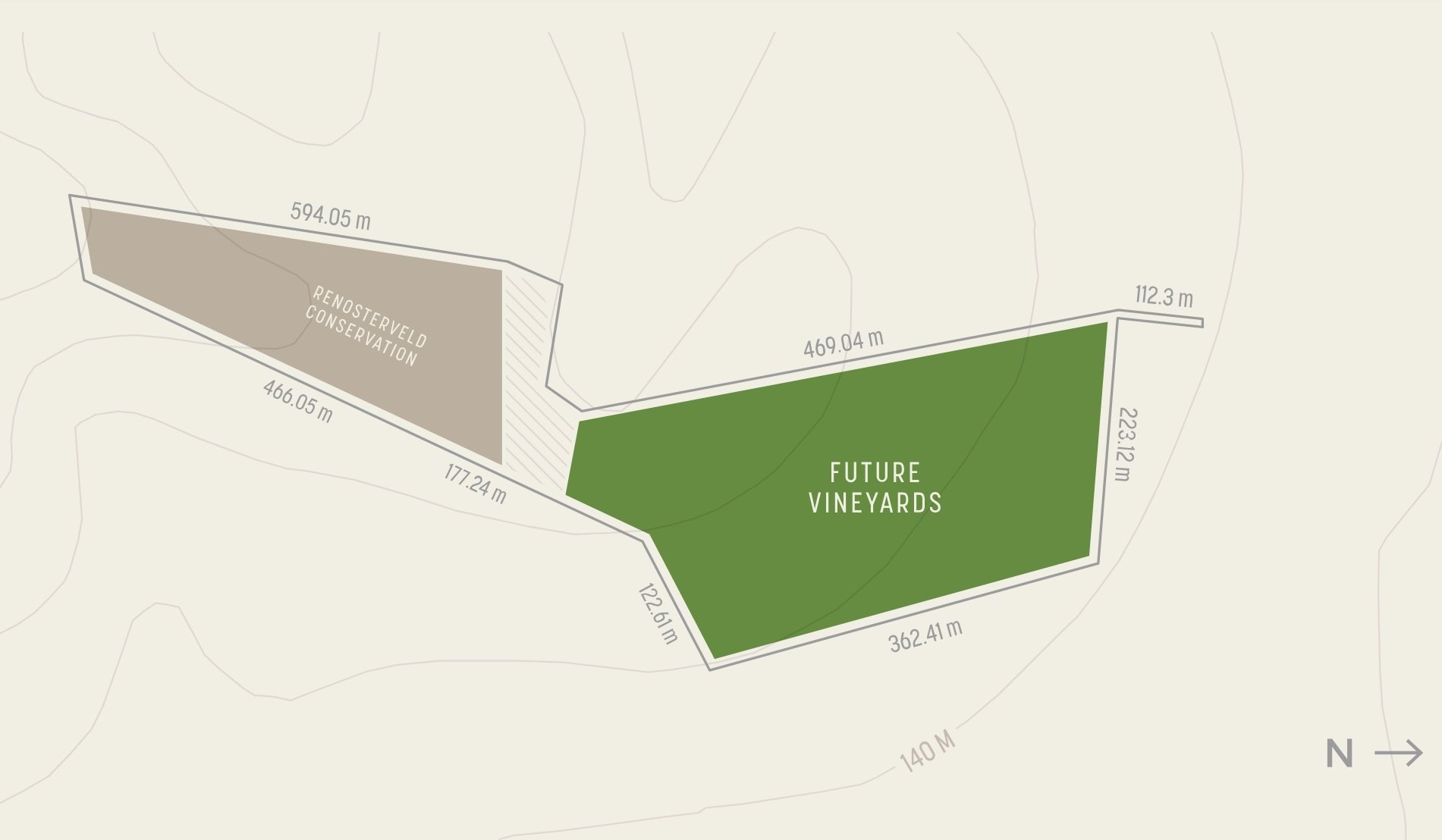
Photo Credit: Tesselaarsdal Winery
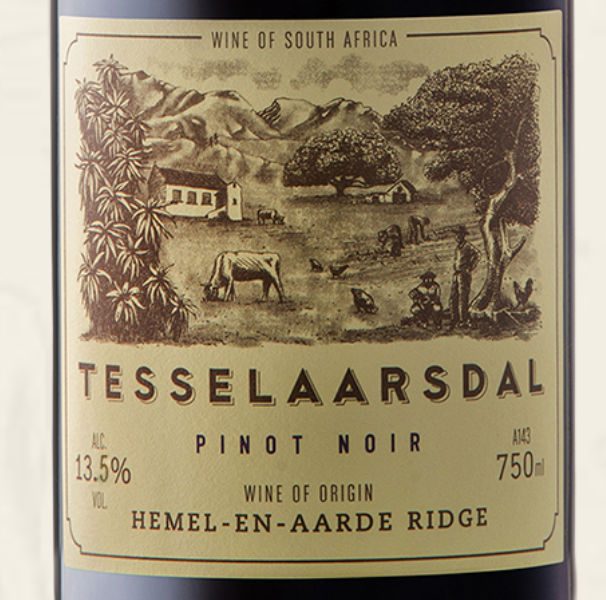
The location was deeply personal. Berene identifies herself as a descendant of the formerly enslaved people connected with the village’s origins. Her wine label also honors more recent generations: two small figures in the mountain scene represent her mother and grandmother.
Planting vineyards there would give her family a new connection to that land. But setbacks followed the purchase. The pandemic interrupted her plans, while boreholes on the property yielded water with sodium levels unsuitable for irrigation.
In September 2022, Berene and her helpers planted 50 experimental Pinot Noir vines on different rootstocks to test their suitability for the salty, clay-rich soils. Neighbor Chris Goatley supplied water for the first planting. Her father, Brian, and son, Darren, joined viticultural specialists and friends in the effort.
Those first vines were a trial, letting the team see how they adapted to the site before undertaking more extensive planting. Nearly three years had passed since the purchase, and producing wine from the property remained a longer-term undertaking.
Berene’s target is 2031, when she plans to produce and bottle Pinot Noir from her own land.
An Ambition That Extends Beyond The Farm
When I asked whether her vision had evolved in unexpected ways, Berene described a widening sense of purpose.
At first, she had wanted to develop her business and establish a family wine farm. As planting began, she thought more about what the project could mean for the village’s future.
She hopes other producers will plant vineyards in the area, creating opportunities for growers, investment, and employment. The question is how to build something economically sustainable that benefits the community and her family.
“This is a long-term goal,” she said.
That ambition is still a work in progress. Its success will depend on the vineyards, the businesses they sustain, and the people who choose to invest their futures there. Still, it makes clear why she is taking on this work.
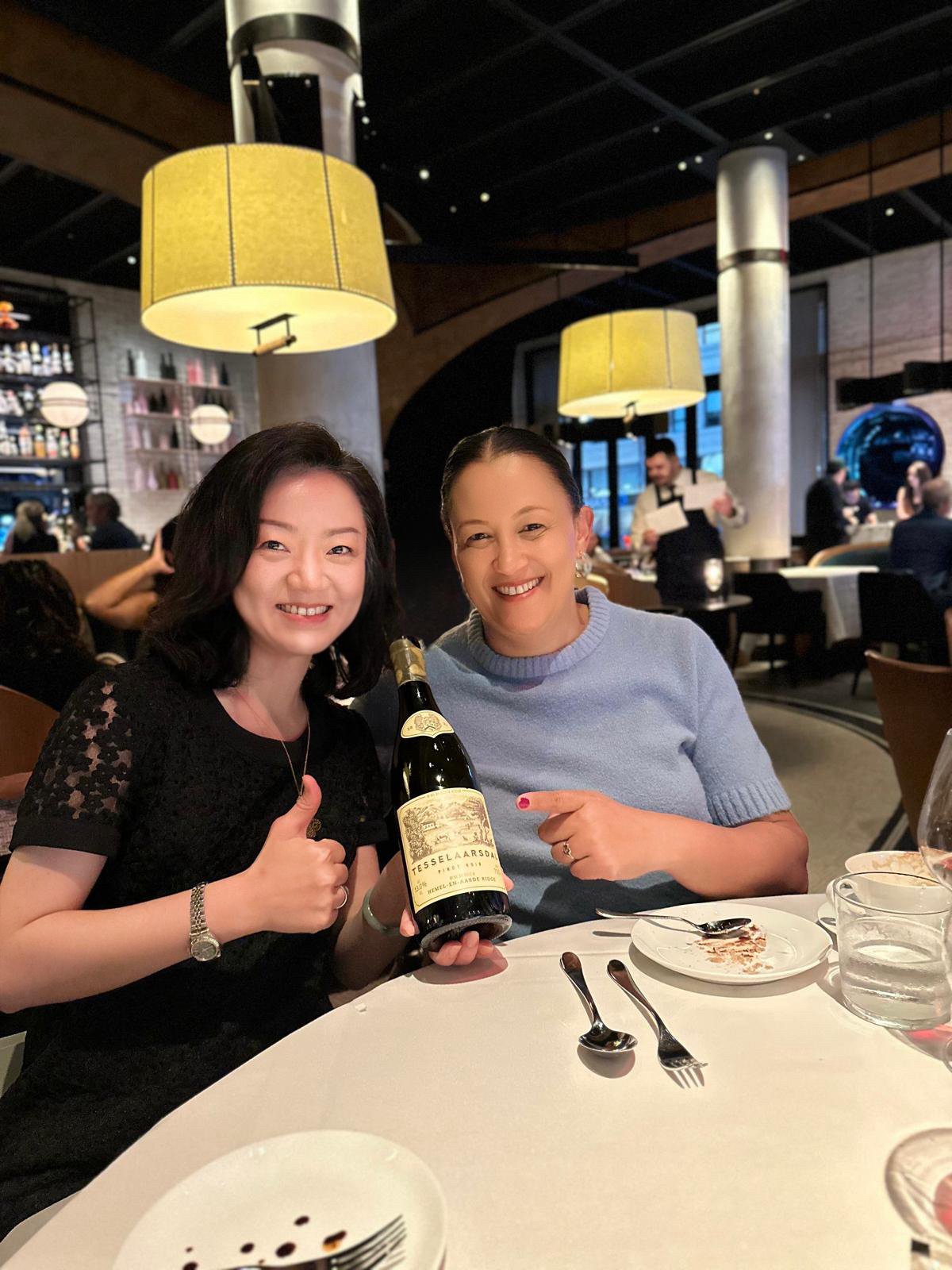
Photo Credit: Joyce Lin
I also asked what she believed would define South African wine over the next twenty years. Her answer centered on producing high-quality wines that offer compelling value. She noted the comparisons often made between South African Pinot Noir and Chardonnay and Burgundy.
My final question concerned collectors who had never bought a South African wine: what were they missing?
For Berene, the answer was the opportunity to discover age-worthy wines and the craftsmanship behind them. She wants collectors to recognize South Africa’s ability to produce wines worth cellaring, as well as enjoying on release.
The two 2023 wines we shared gave me a personal starting point for that exploration. Their finesse made an impression; learning about the vineyard she is developing gave me a reason to stay interested.
When Pinot Noir from her own land is ready, it will offer a new expression of Tesselaarsdal. It will also represent years of investment in a place she knows as home.
I look forward to tasting it.