
A MAP IS AN ACT OF BELIEF: HOW LIVIO FELLUGA MADE FRIULI VISIBLE
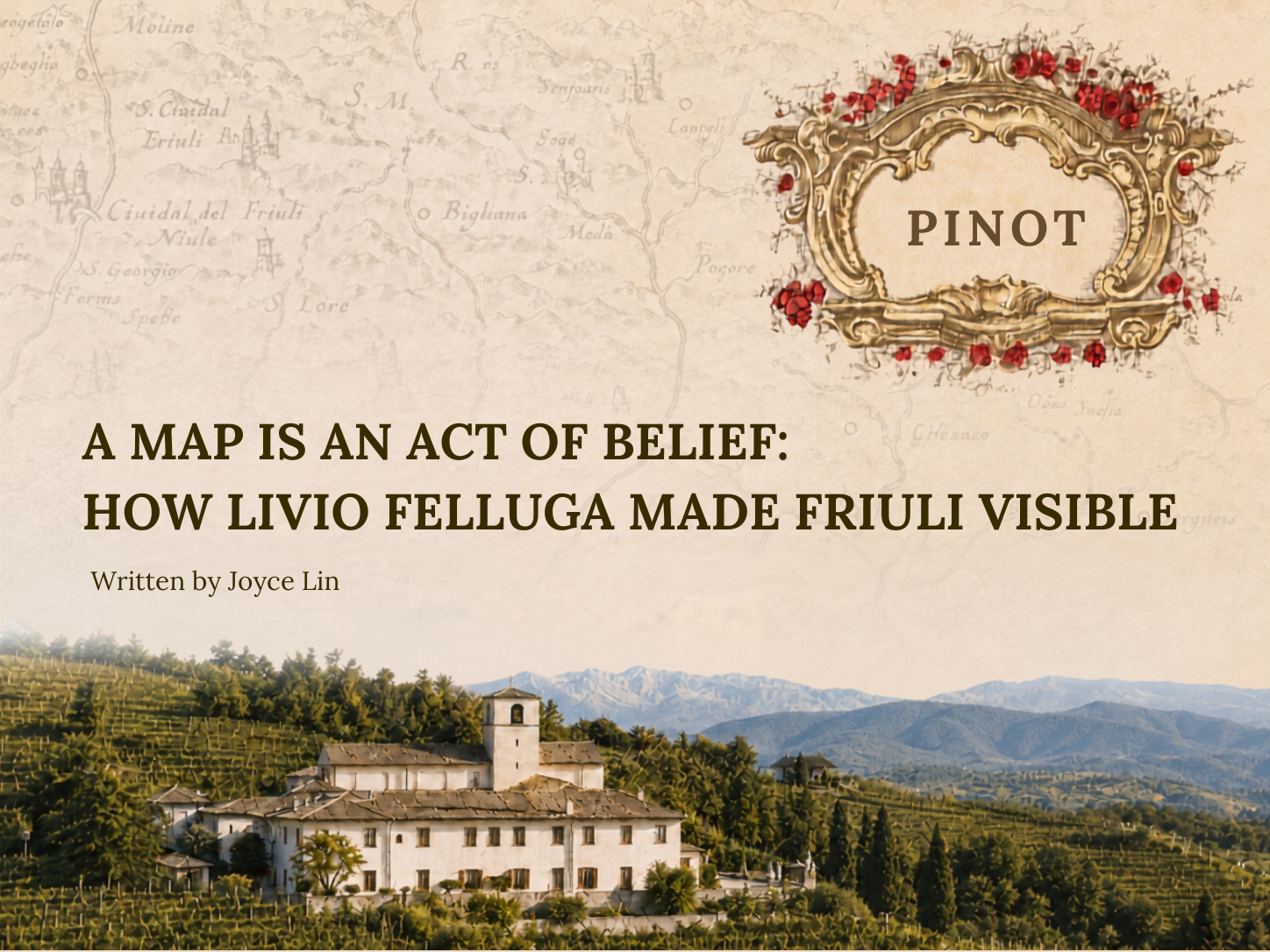
Eleven years after a glass of Livio Felluga Pinot Grigio changed my understanding of the variety. I arrived in Rosazzo to meet the family that has spent generations revealing the character and distinction of Friuli’s hills to the world
Eleven years ago, I met Friuli in a classroom.
I was studying in the intensive sommelier program in 2014 when Livio Felluga Pinot Grigio was poured into my glass. By then, I knew the variety mostly through the light, neutral examples that had made it familiar around the world. This wine spoke with an entirely different voice. It had texture, ripeness and aromas, but also energy and a savory, mineral persistence. It was the most revelatory Pinot Grigio I had tasted.
Some wines impress us. Rarer wines correct an assumption we did not realize we were carrying.
That bottle changed the way I saw Pinot Grigio and placed Friuli on my mental map long before I walked its hills. In June 2026, as Livio Felluga’s Geographical Map label entered its seventieth year, I traveled to Rosazzo to understand the vision behind it.
Filippo and Vittoria Felluga welcomed us with a warmth that reached far beyond hospitality. Through the vineyards, the ancient cellars and the stories they shared, they opened a window onto the memories and relationships that have bound their family to these hills across generations.
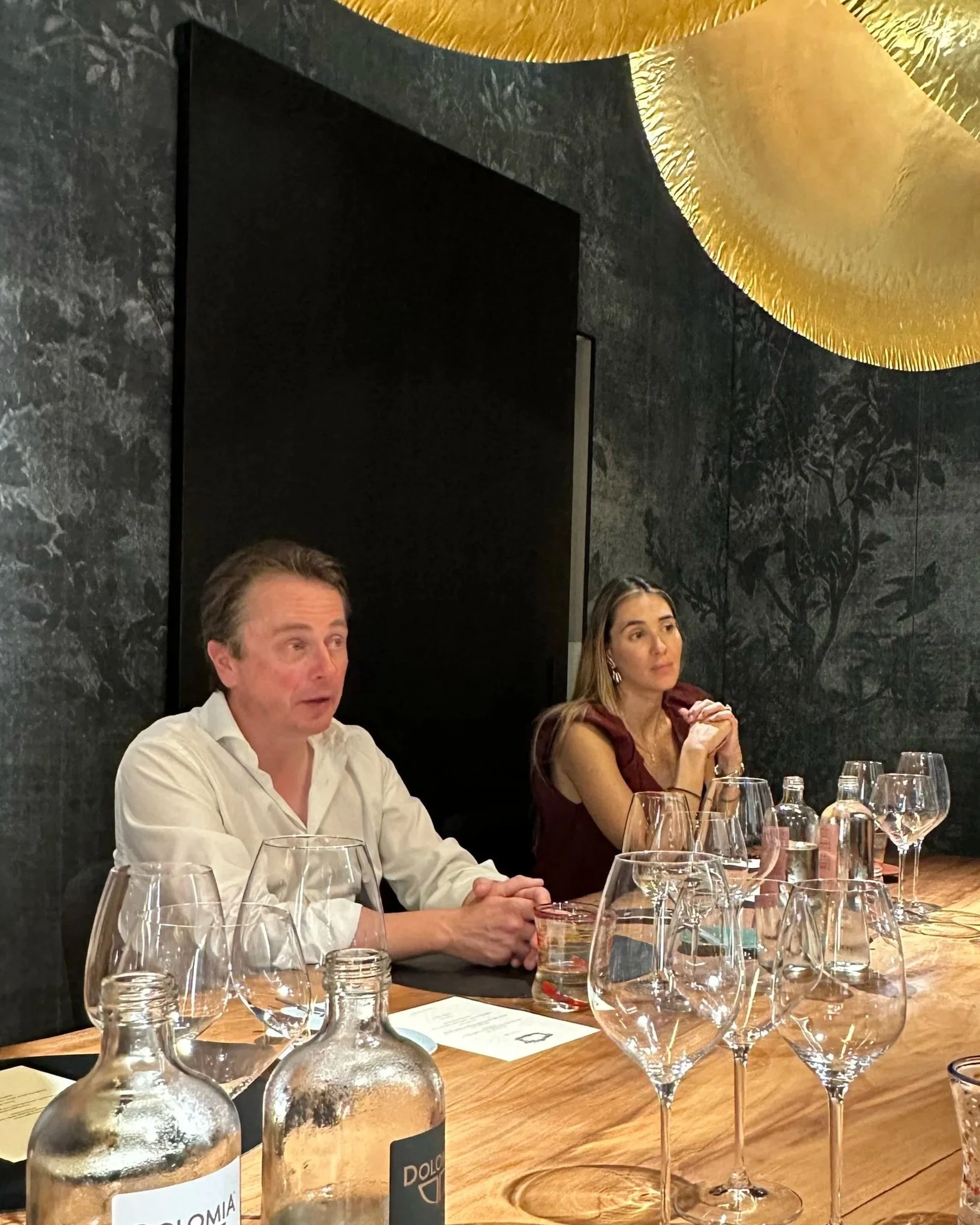
Filippo and Vittoria Felluga share the history of Livio Felluga at Vitello d'Oro | Photo Credit: Joyce Lin
Filippo, Livio’s son, works closely with the vineyards; Vittoria, Livio’s granddaughter and the estate’s export director, represents the third generation now carrying its story outward. Together, they show how Livio’s vision remains alive across generations, rooted in the family’s history, renewed through their work and carried outward to new audiences.
The story of Livio Felluga is inseparable from the courage and foresight of its founder: his return from the Second World War, the restoration of neglected vineyards, the release of his first wines in 1956 and the creation of the geographical map that became the estate’s emblem. Standing in Rosazzo, I saw the enduring reach of that vision in the hills he restored and in the family that continues to care for them.
What began with one man’s conviction has become a multigenerational commitment to keeping Friuli visible to the world.
Before Friuli Was Seen
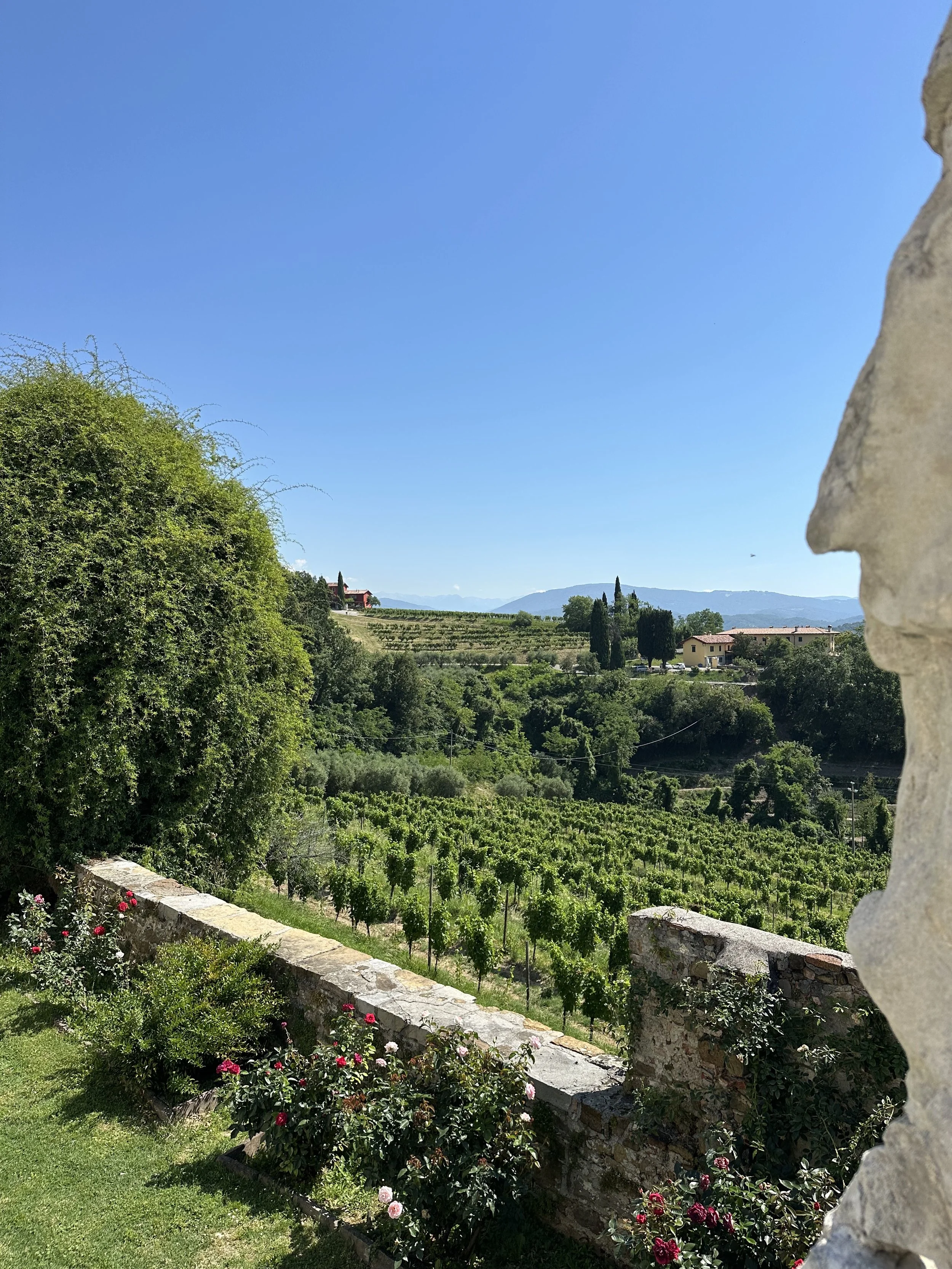
When Livio Felluga began acquiring vineyards in Rosazzo in the 1950s, hillside farming here was far from an obvious route to success. The aftermath of war had left land abandoned and rural communities depleted. Yet he believed that these eastern hills, shaped by Eocene marl and sandstone, cooled by air descending from the Alps and influenced by the nearby Adriatic, could produce wines of identity and character.
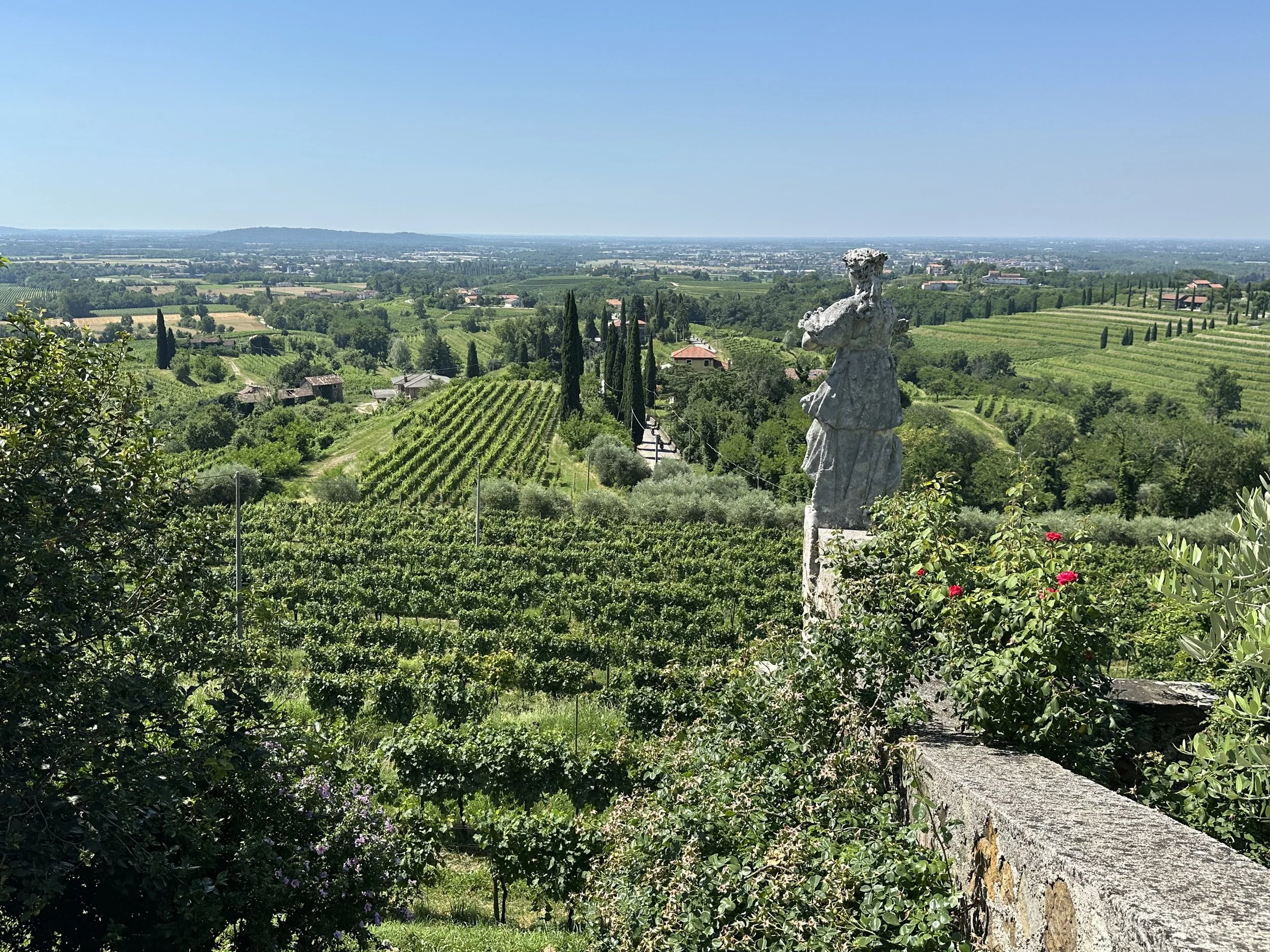
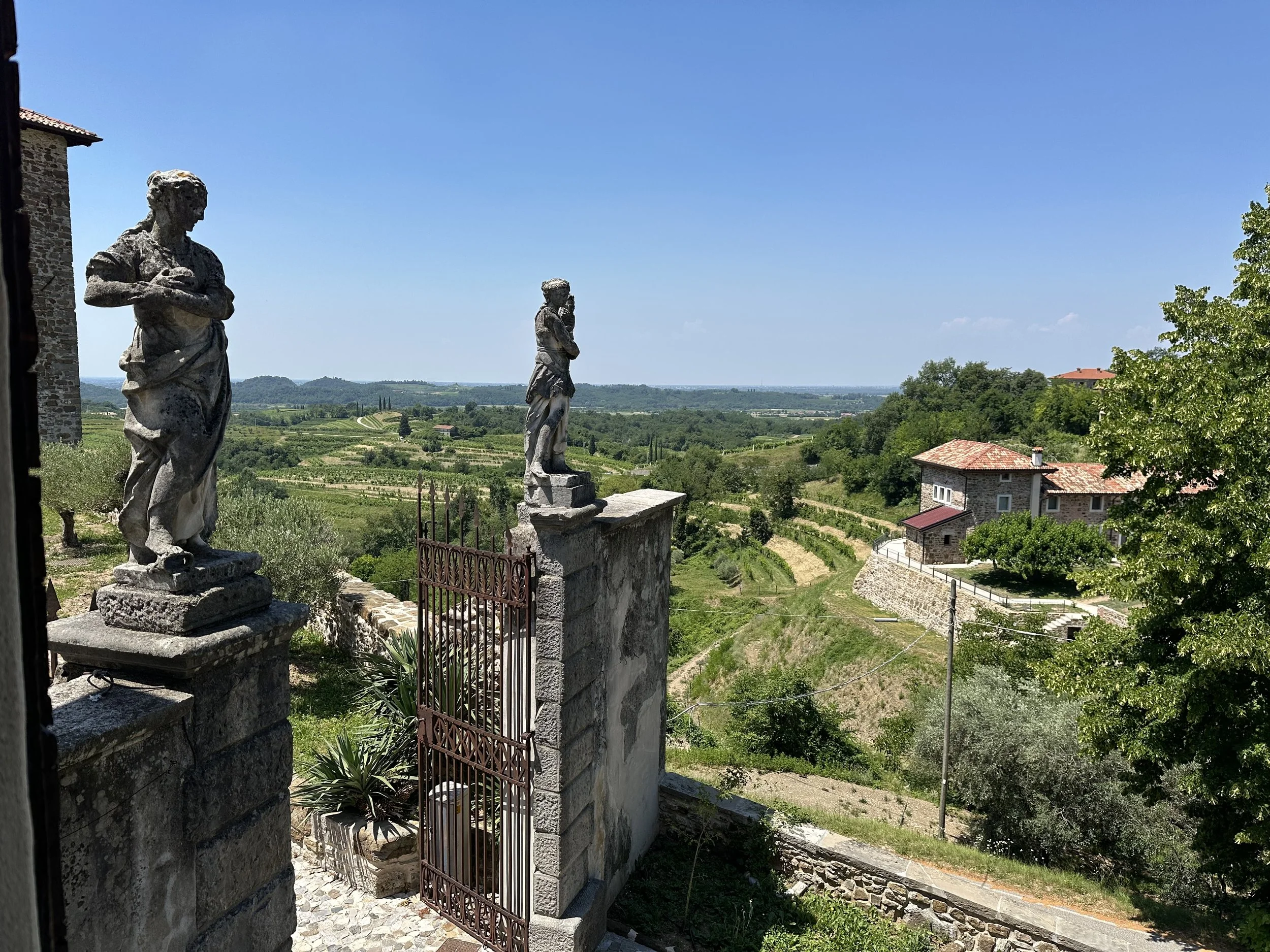
Overlook the vineyards from Rossazzo Abbey | Photo Credit: Joyce Lin
In 1956, he put an old topographical map of Friuli on his label. Today it is instantly recognizable. At the time, it was an audacious statement.
Putting a map on a bottle before the place itself gained international recognition was more than branding. It was a declaration that origin should be highlighted. Livio was not asking consumers to remember his name; he wanted them to recognize Friuli.
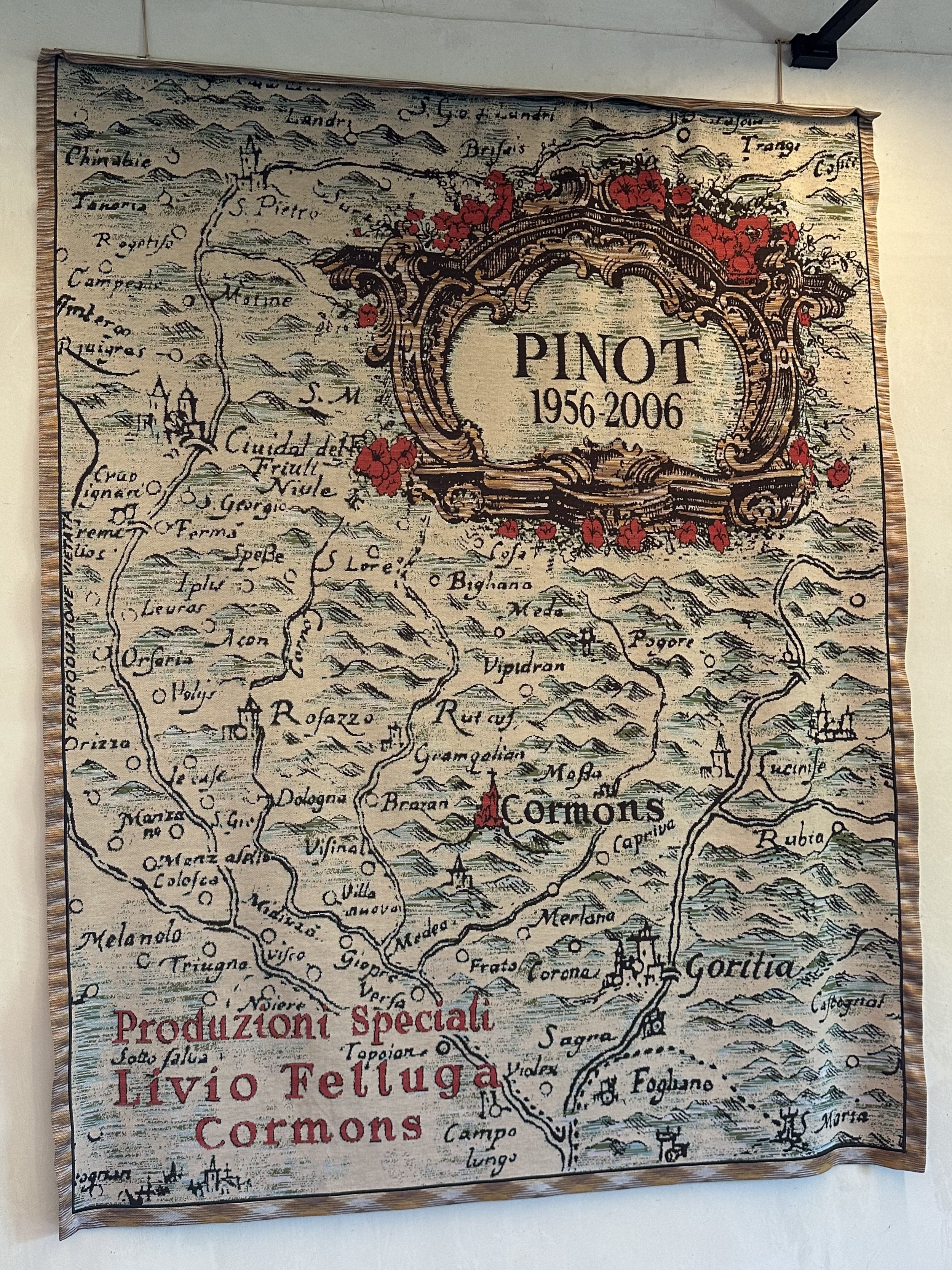
Livio Felluga created the Geographic Map of Friuli, highlighting the region | Photo Credit: Joyce Lin
The estate has grown into a mosaic of 242 hectares, including 187 hectares under vine divided among more than 300 parcels. It works with 14 varieties and produces 19 wines. It reflects Friuli’s rich identity: Adriatic warmth and Alpine air, native and international grapes, and both celebrated and nearly forgotten varieties. Livio Felluga’s vision has brought them into focus.
At the Monastery of Roses
That conviction takes root at Abbazia di Rosazzo.
The abbey’s origins unfold in chapters. Tradition tells of a hermit named Alemanno who settled on the hill around the year 800. The Church of Saint Peter was inaugurated in 1070; the monastery was elevated to an abbey in 1090, and Benedictine monks arrived the following year. Across more than a thousand years of changing rulers, religious orders and seasons, each generation found a way to renew this place. Vines and olive trees continued to grow on the hillside, carrying its life forward.
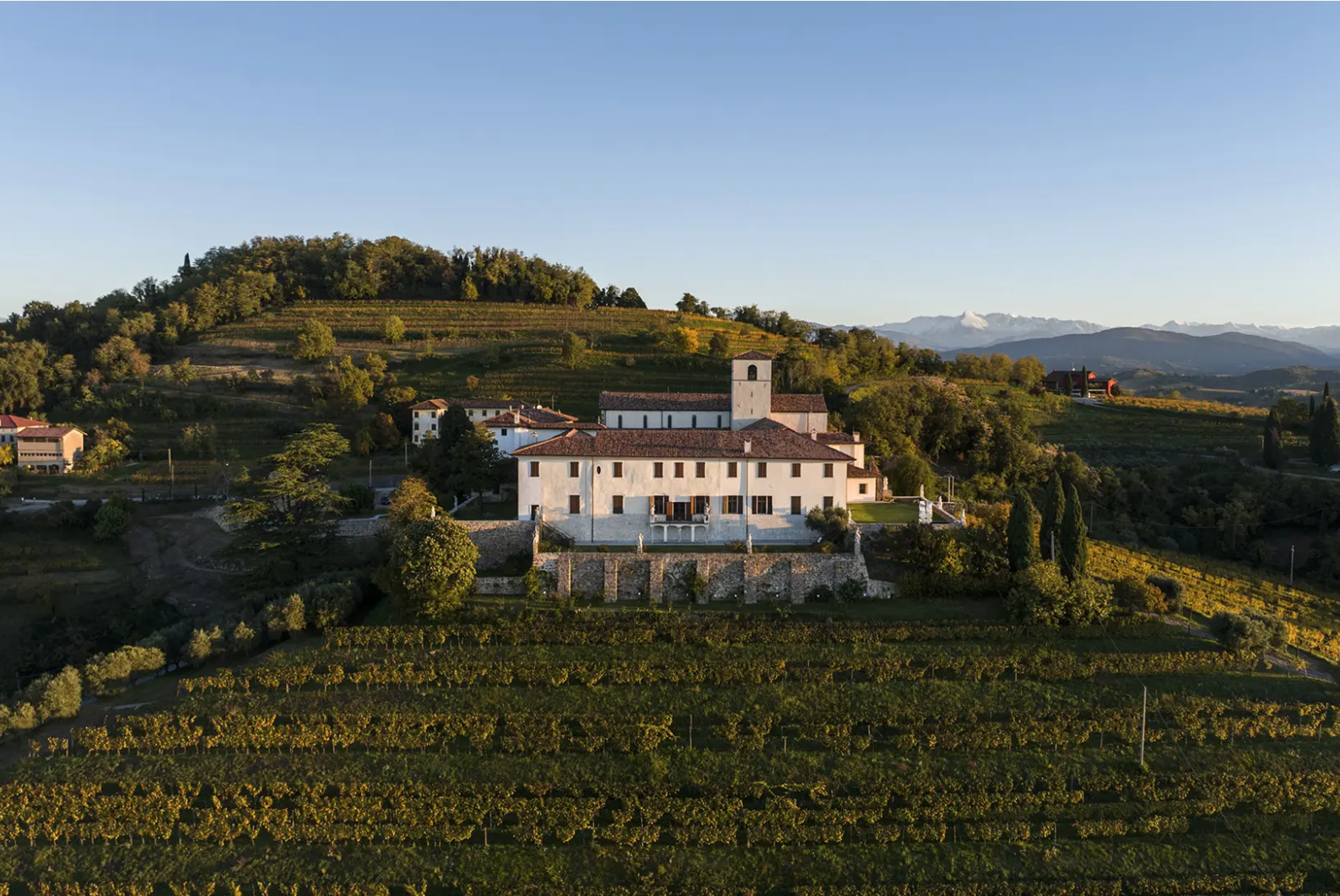
Rossazzo Abbey and surrounding vineyard | Photo Credit: Livio Felluga
The continuity was carried forward by those willing to share their knowledge, work, and passion for a place whose story stretches beyond a single lifetime.
Filippo told us how Livio’s relationship with the abbey grew through friendship and trust. The historic vineyards needed experienced hands, and Livio had already devoted himself to restoring the rolling hills nearby. From the shared purpose, a spirit of stewardship took root and has been passed down through generations, weaving a story of care and tradition.
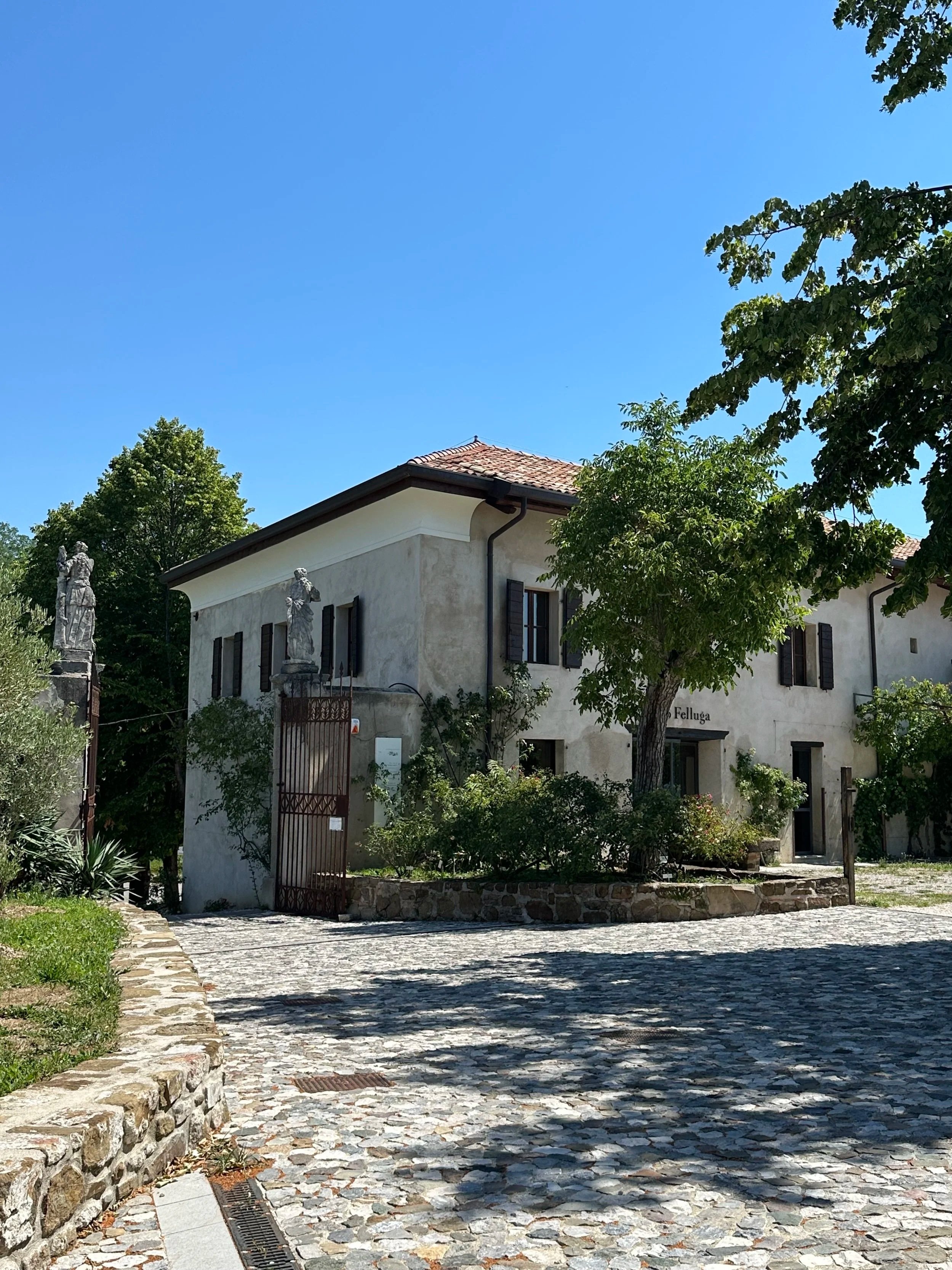
Livio Felluga’s tasting room and store front at Rossazzo Abbey | Photo Credit: Joyce Lin
Today, the Felluga family manages the abbey’s historic vineyards and olive groves, along with parts of the complex, including the western tower and ancient cellars. The estate has also restored selected spaces, opening for hospitality and tasting in May 2025. Each renewal allows the abbey to welcome people once again, connecting its ancient foundations to the life unfolding around it today.
The family’s role here is sacred guardianship, carrying a story begun centuries before their time with reverence to ensure its survival for future generations. Their responsibility is woven into the daily rhythm of the place: tending vineyards, keeping the ancient cellars breathing, and preserving the delicate dialogue among wine, landscape, and culture in every vintage.
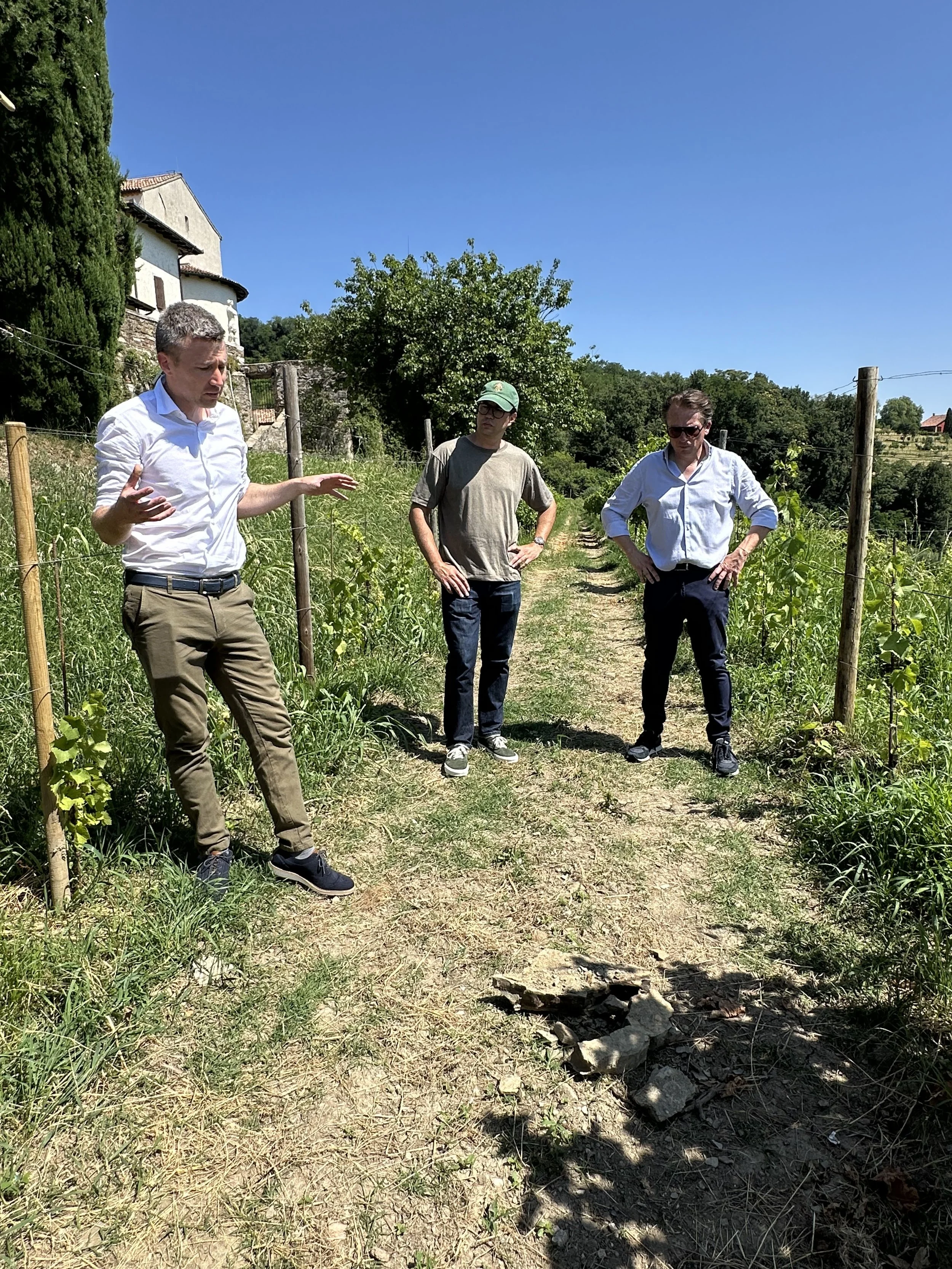
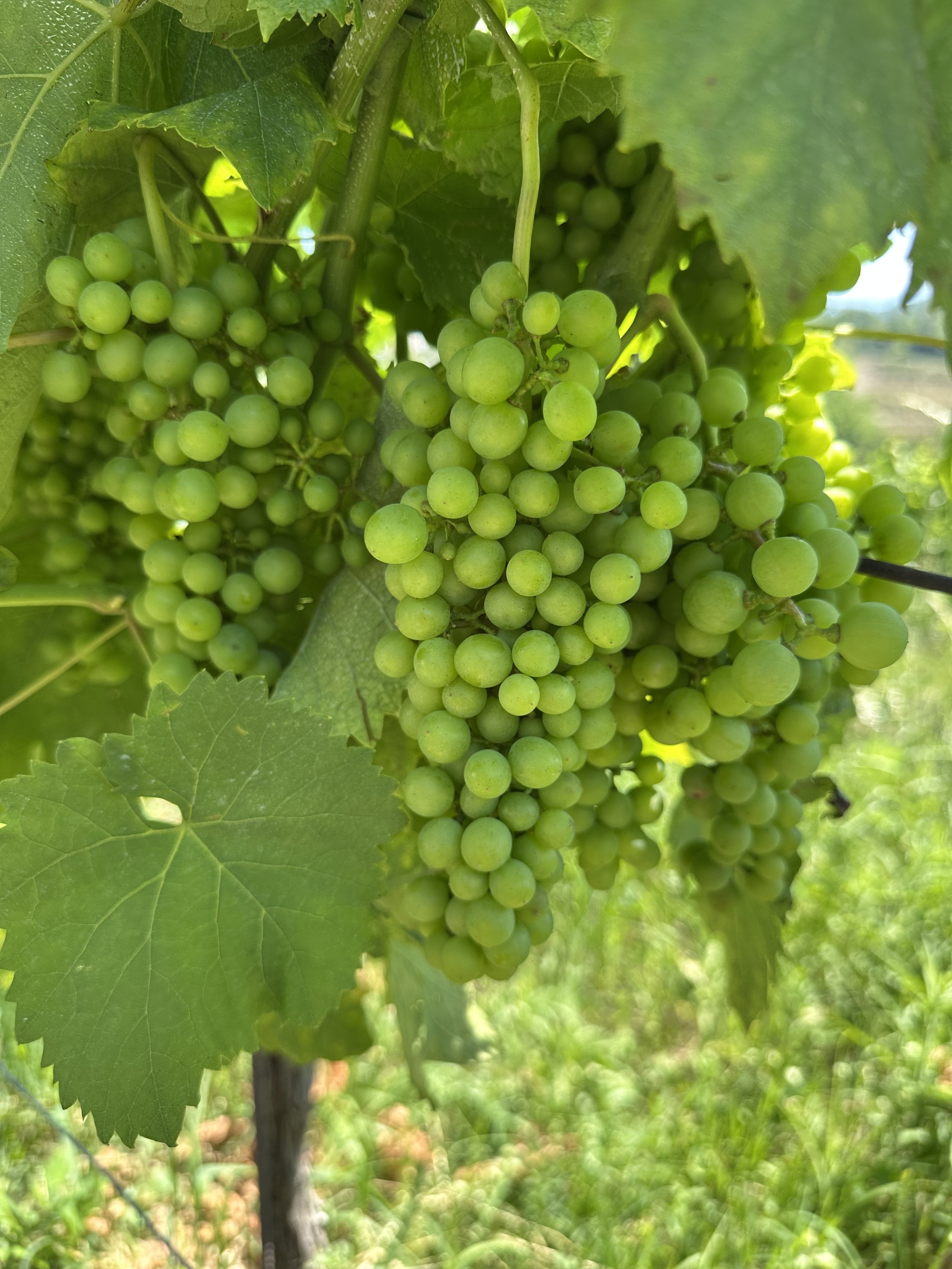
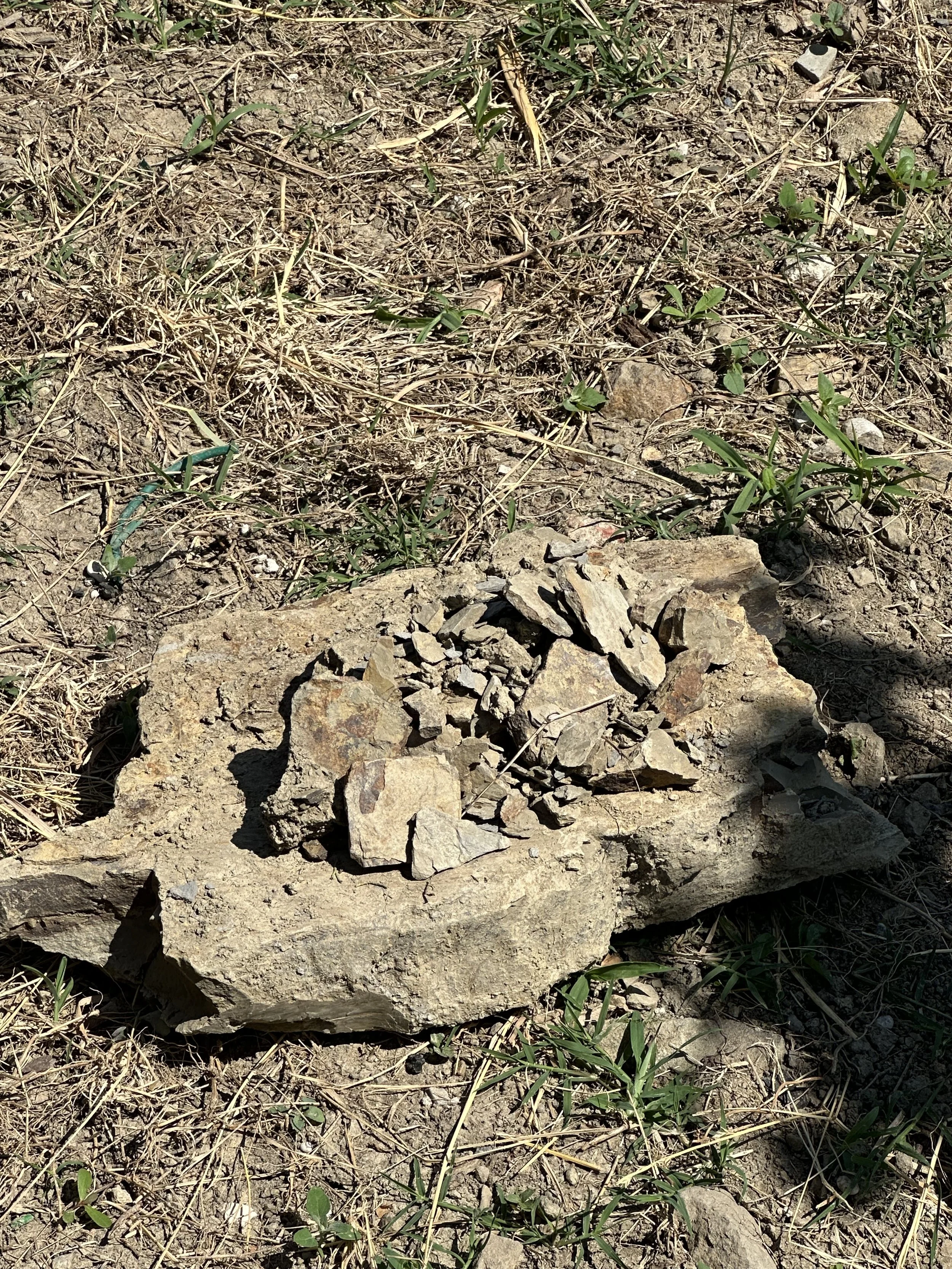
We walked through vineyards rooted in ponca, the local name for the layered marl and sandstone formed on an ancient seabed. It crumbled gently between my fingers, a fragment of deep geological time. On these slopes, the soil demands patience and precision from the vines and the people who tend them. The estate harvests by hand, parcel by parcel, while some old-vine selections receive hundreds of hours of work per hectare.
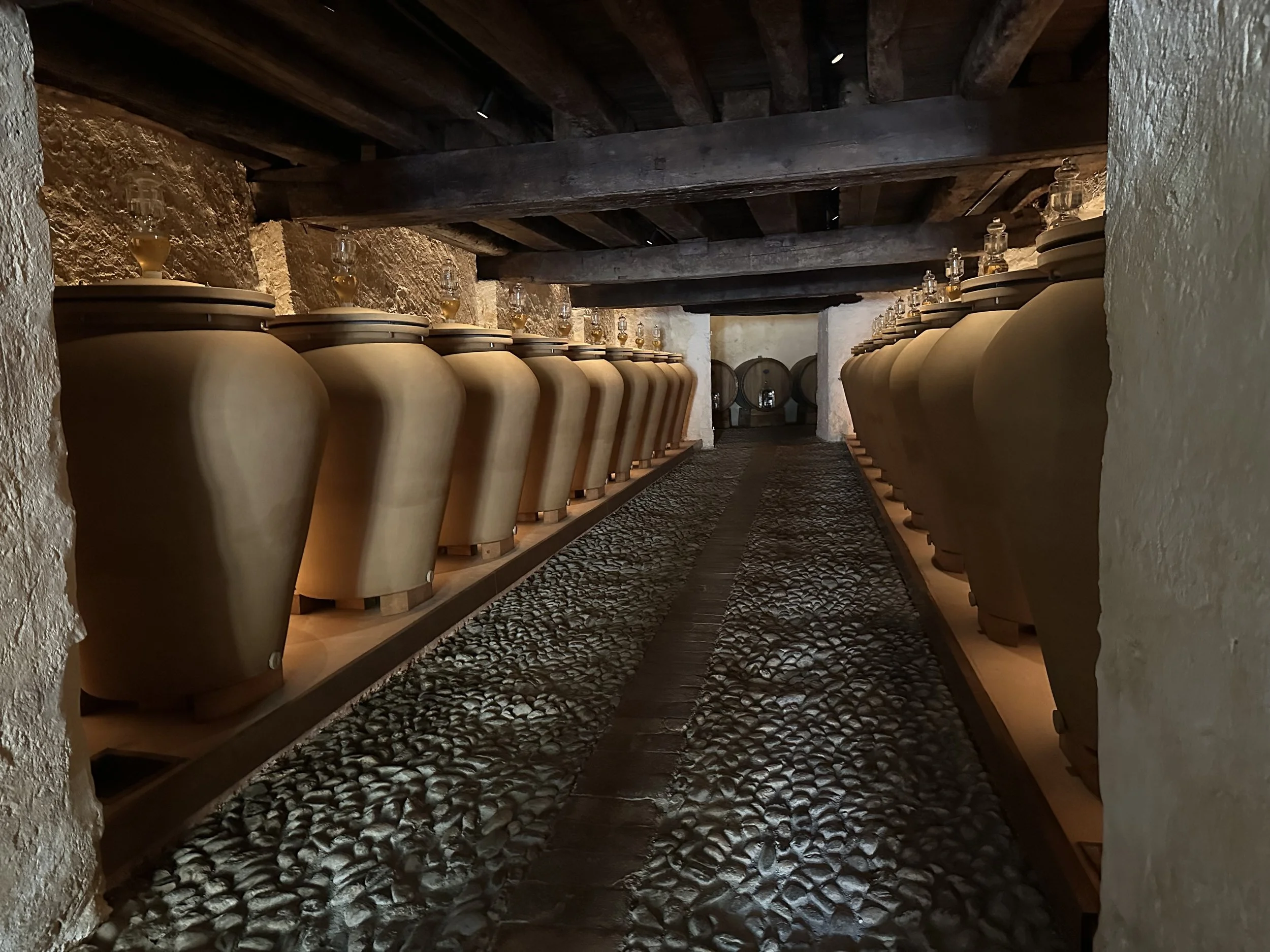
Wind moved steadily through the rows. Below us, olive groves stretched along the hills toward the horizon. Within the abbey walls lies what Livio Felluga identifies as Friuli’s oldest aging cellar, dating back to the late 12th century.
Here, history breathes through the landscape. It is pruned in winter, awakened in spring, harvested in autumn, and returned to the table in every glass.
Two Flagships, Two Expressions of Memory
Livio Felluga includes two wines in its Iconici collection: Terre Alte and Abbazia di Rosazzo. Both come from the historic vineyards of Rosazzo and are structured white blends designed to evolve over time. Each expresses a different facet of the estate’s identity.
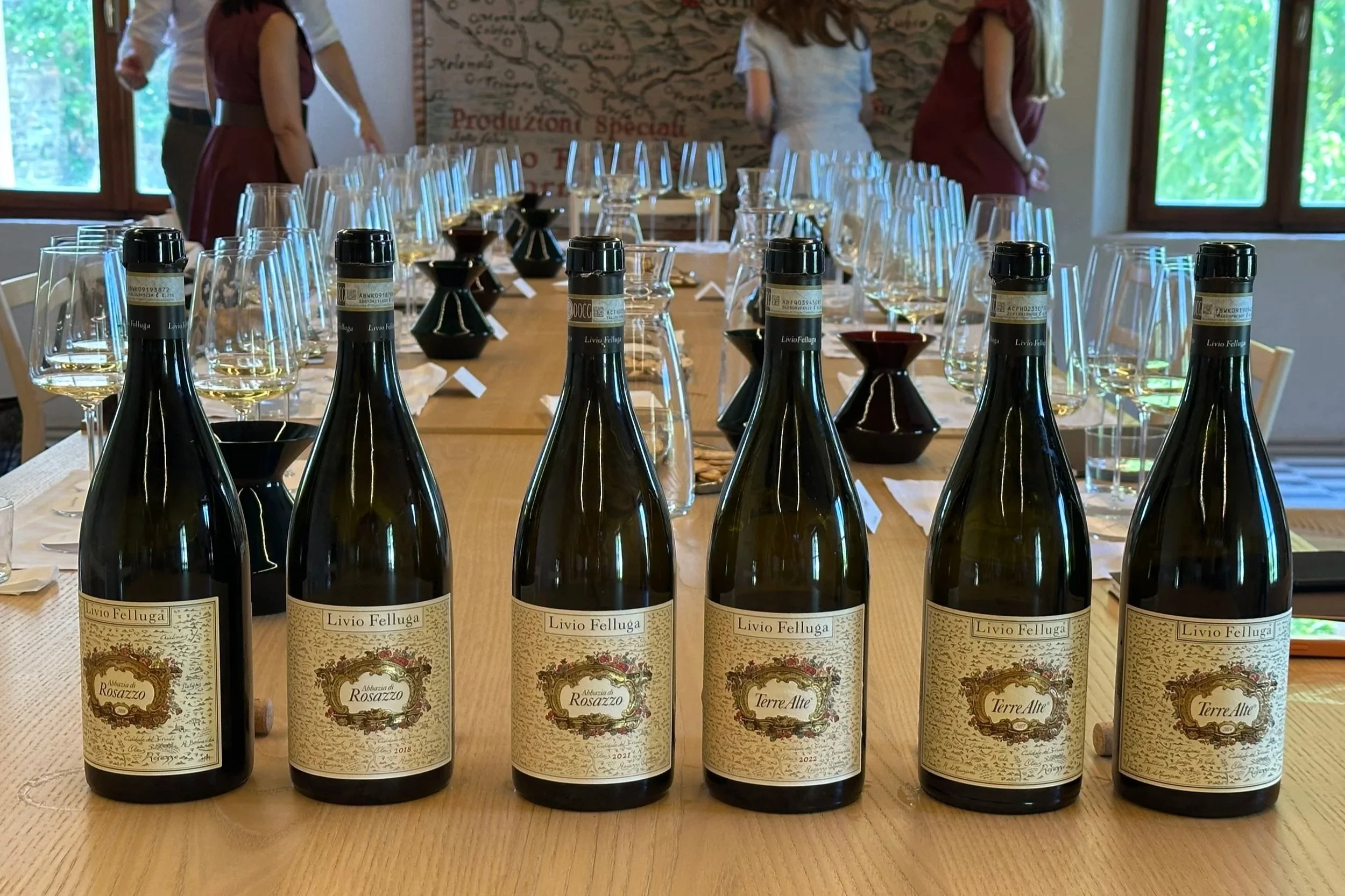
Livio Felluga Abbazia di Rosazzo and Terre Alte Vertical Tasting | Photo Credit: Joyce Lin
Terre Alte, first produced in 1981, brings together Friulano, Pinot Bianco and Sauvignon. It emerged as a confident vision of what a great Friulian white wine could become. The natural concentration of hillside fruit, thoughtful use of oak, time on the lees, and the freshness of Rosazzo give the wine the structure and vitality to gain depth, harmony, and eloquence with age.
Abbazia di Rosazzo, first produced in 2009, unites five grapes: Friulano, Sauvignon, Pinot Bianco, Malvasia Istriana and Ribolla Gialla, from the abbey’s historic vineyards. While Terre Alte expresses the ambition and aging potential of Friulian white wine, Abbazia di Rosazzo carries the inheritance of this particular place: centuries of monastic agriculture, the layered culture of a borderland and a tradition in which different varieties find harmony through the art of blending.
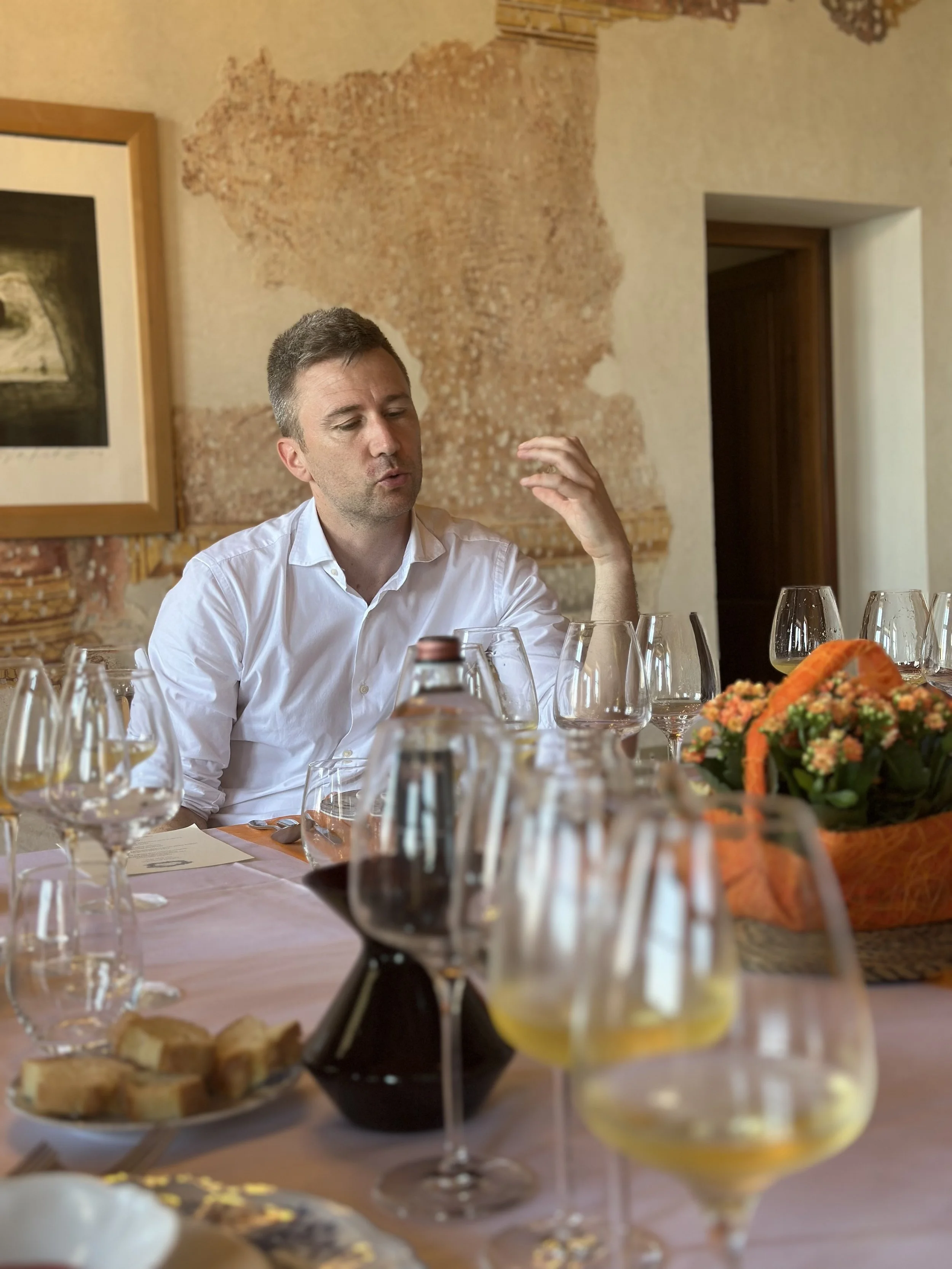
Oenologist Daniele Vuerich at Livio Felluga | Photo Credit: Joyce Lin
At Livio Felluga, oenologist Daniele Vuerich guided us through a rare double vertical tasting, showcasing the remarkable evolution of their wines. We sampled Abbazia di Rosazzo 2022, 2018, and 2016 alongside Terre Alte 2022, 2017, and 2014. Tasting three vintages of each flagship side by side was an extraordinary privilege, allowing us to observe how each wine developed over time. Each glass revealed different stages in the wine’s evolution, highlighting both the vintage’s subtle influence and the blend’s growing depth, harmony, and complexity. Six wines, two distinct expressions, and a historic landscape spanning the years. This tasting offered a captivating portrait of the aging potential and consistency of Livio Felluga’s white wines. I’m so grateful to Daniele for walking us through this impressive lineup.
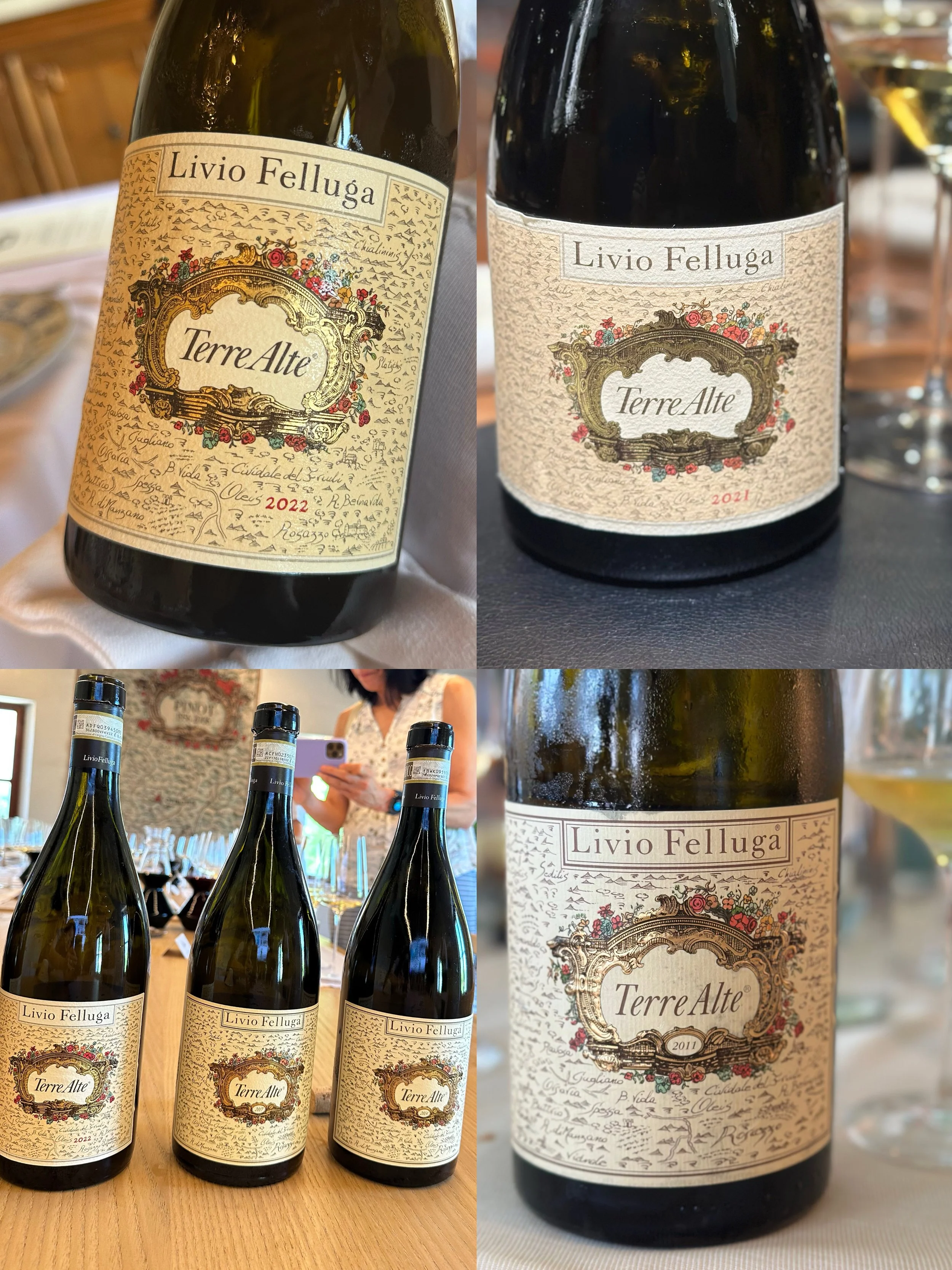
Tasting mutiple vintages of Livio Felluga Terre Alte: from 2022, 2021, 2017, 2014, and 2011 | Photo Credit: Joyce Lin
Our exploration of Terre Alte continued beyond the vertical. Earlier in the visit, we tasted the 2021 from magnum. On our final day, Filippo and Vittoria opened a 15-year-old bottle of the 2011 from the family cellar, an immensely generous gesture and a rare opportunity to witness Terre Alte at maturity. Together, the two vintages formed another compelling portrait of the wine across time. The 2021 carried ripe stone fruit, savory depth and an energy shaped by warm days and cool nights. The 2011 had deepened to gold, unfolding with dried apricot, toasted hazelnut, clove and gentle nuttiness. A fine thread of freshness still ran through its mature flavors, holding them together with remarkable grace and affirming the longevity of Friulian white wine.
Terre Alte is the family’s conversation with time. Abbazia di Rosazzo carries the memory of the Rosazzo hill. Its monastic heritage, historic vineyards, and centuries-old tradition of blending Friuli’s grapes into a single wine.
The meaning of Abbazia di Rosazzo also comes from the enduring relationship of care behind it. Each variety contributes a distinct voice, and time allows those voices to grow closer. Together, they form a portrait of Rosazzo, rooted in history, shaped by the present, and entrusted to the future.
Pinot Grigio, Seen Anew
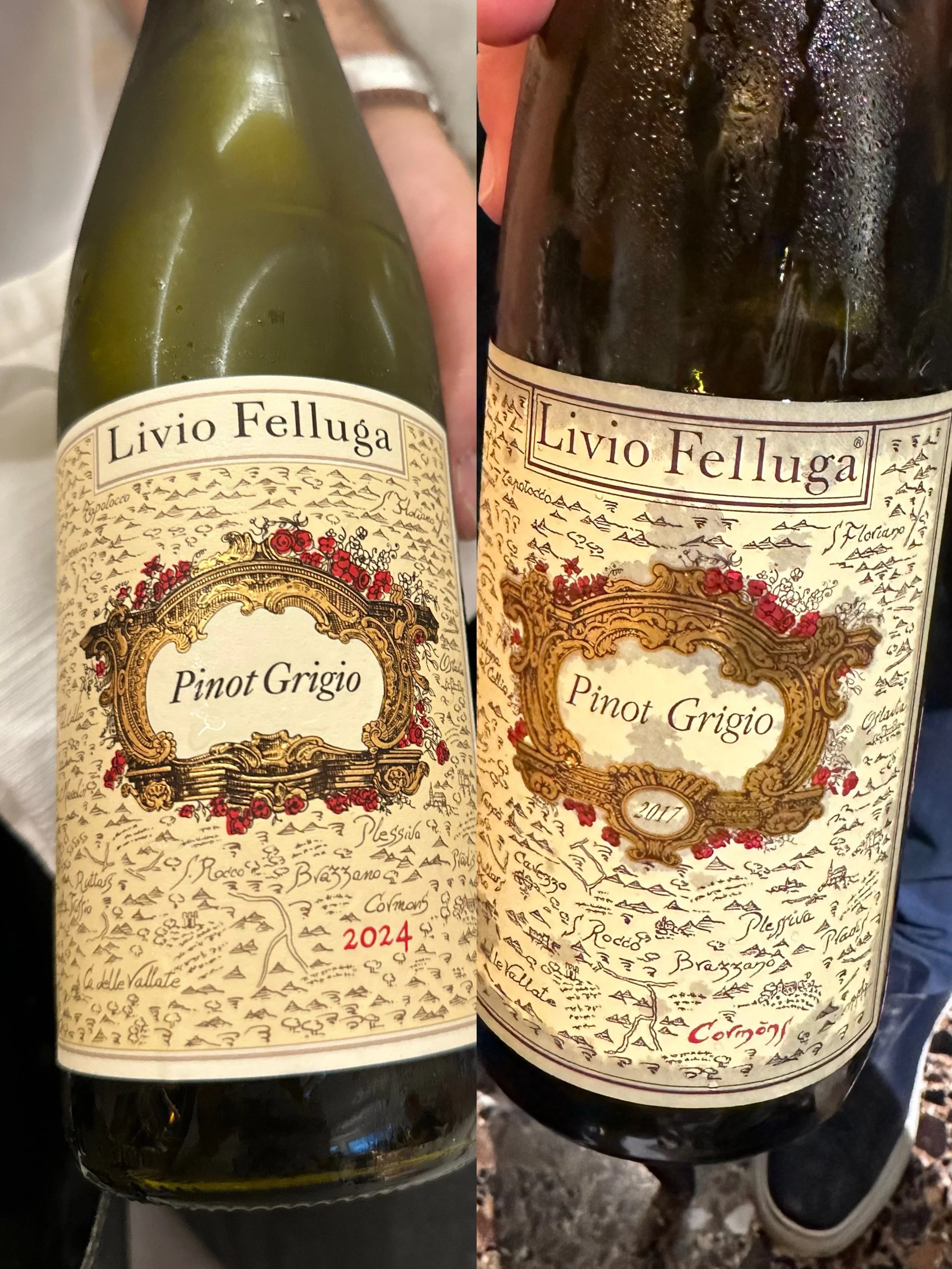
Livio Felluga Pinot Grigio 2024 and 2017 | Photo Credit: Joyce Lin
For consumers discovering Livio Felluga, I would begin where my own journey began eleven years ago: with the classic Pinot Grigio. That first glass revealed a variety with texture, depth, and a distinct sense of place. Returning to it at the estate brought the experience full circle.
During our visit, we tasted the 2024 and 2017 on successive days. The 2024 spoke with the brightness of youth: apricot and yellow peach were lifted by flowers, fresh herbs and ginger, while a savory finish gave the wine definition. It was generous yet precise, with a subtle pink copper hue recalling the natural color of Pinot Grigio’s skins.
The 2017 offered a different expression. Born from a warm, dry growing season marked by spring frost, it had evolved into a more layered wine with a flinty, mineral character, rounded texture and deeper fruit. At nine years of age, it still carried freshness and clarity, while time had drawn its flavors into a more harmonious whole.
Tasted in close succession, the two vintages revealed Pinot Grigio as a wine with both immediacy and continuity. The 2024 captured the energy and aromatic detail of a young vintage; the 2017 showed how those qualities could deepen and become more integrated with age. Together, they brought me back to what made my first encounter with Livio Felluga so memorable: a familiar grape that offered far more depth than its name alone might suggest.
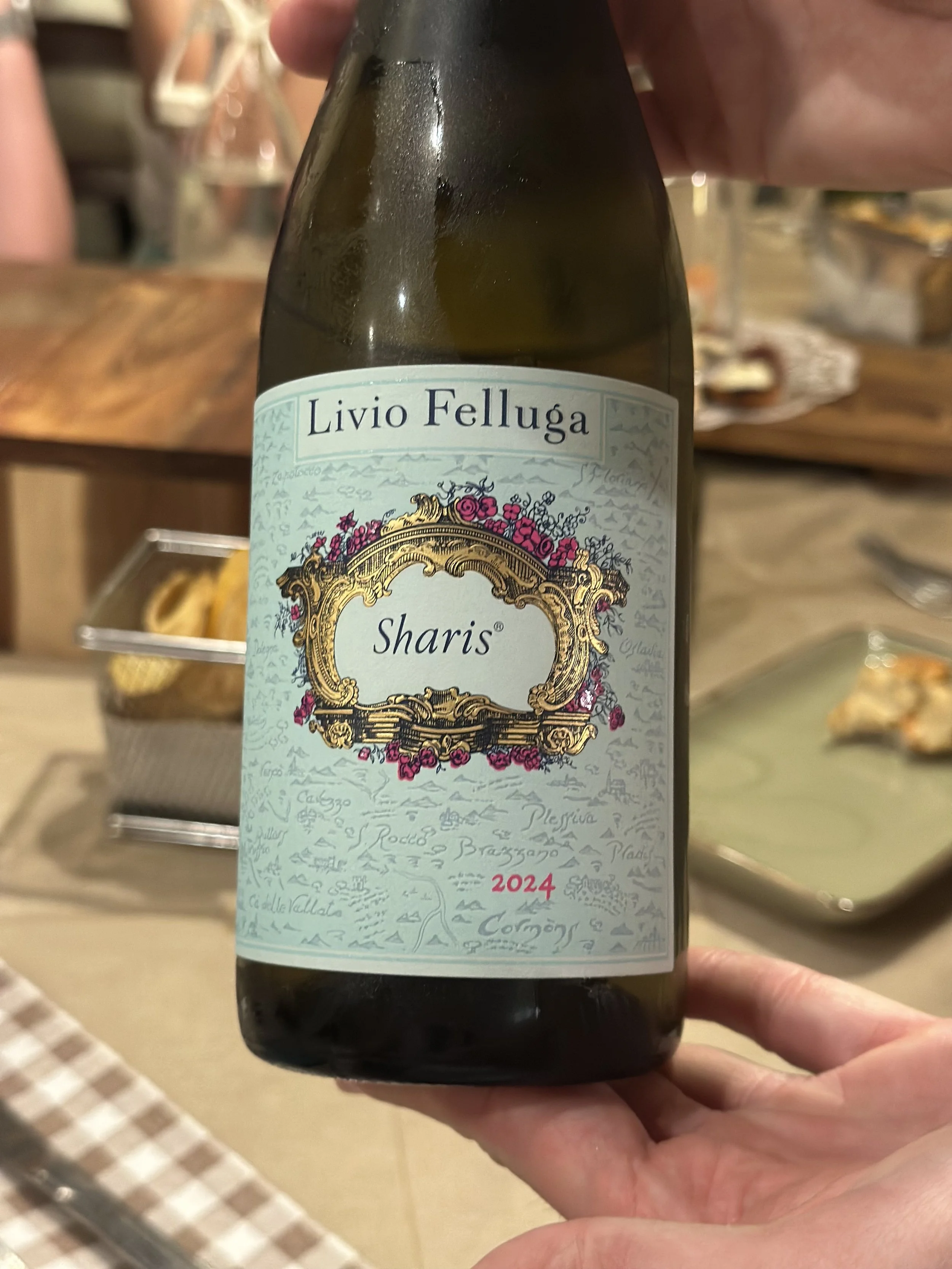
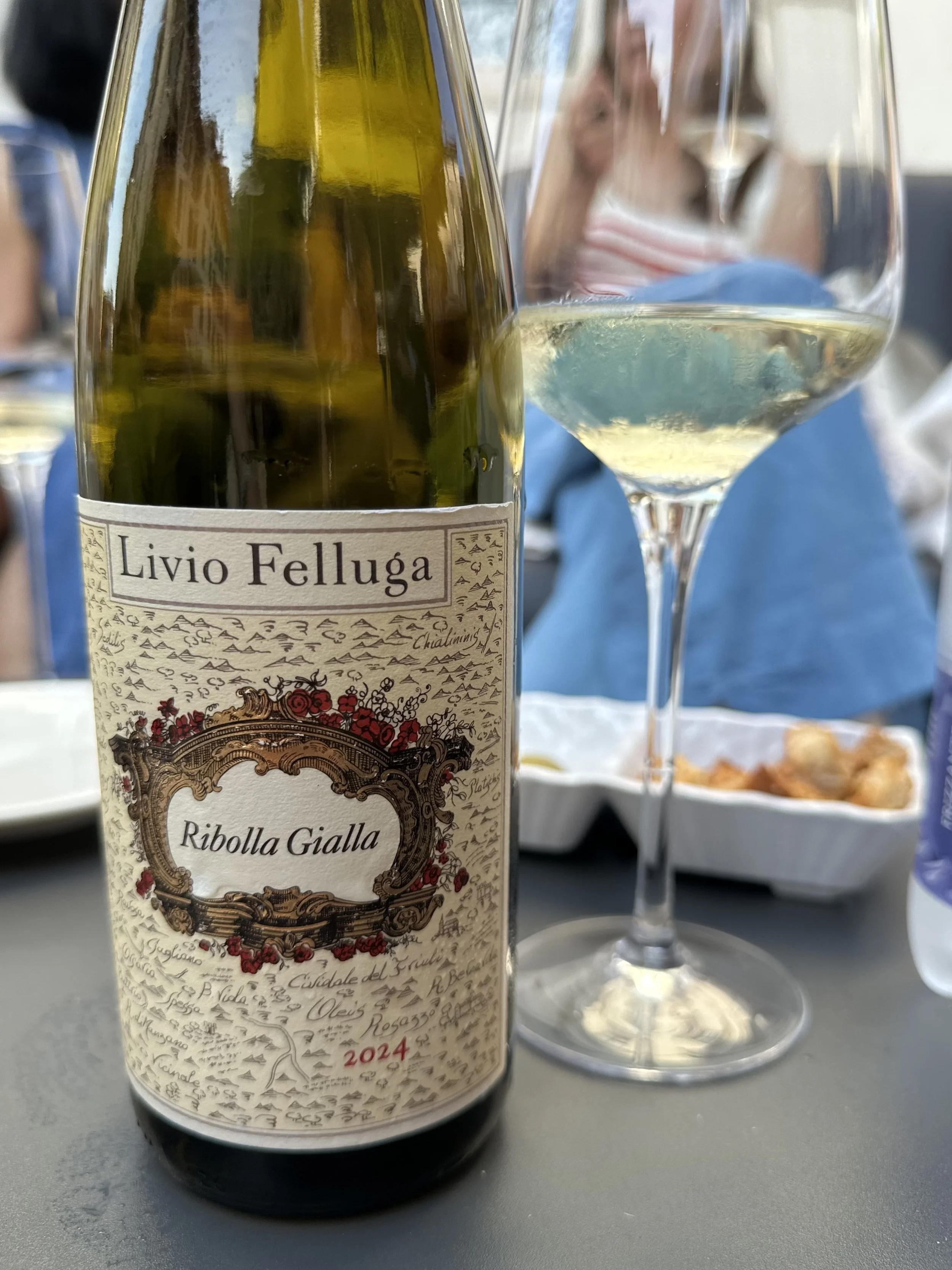
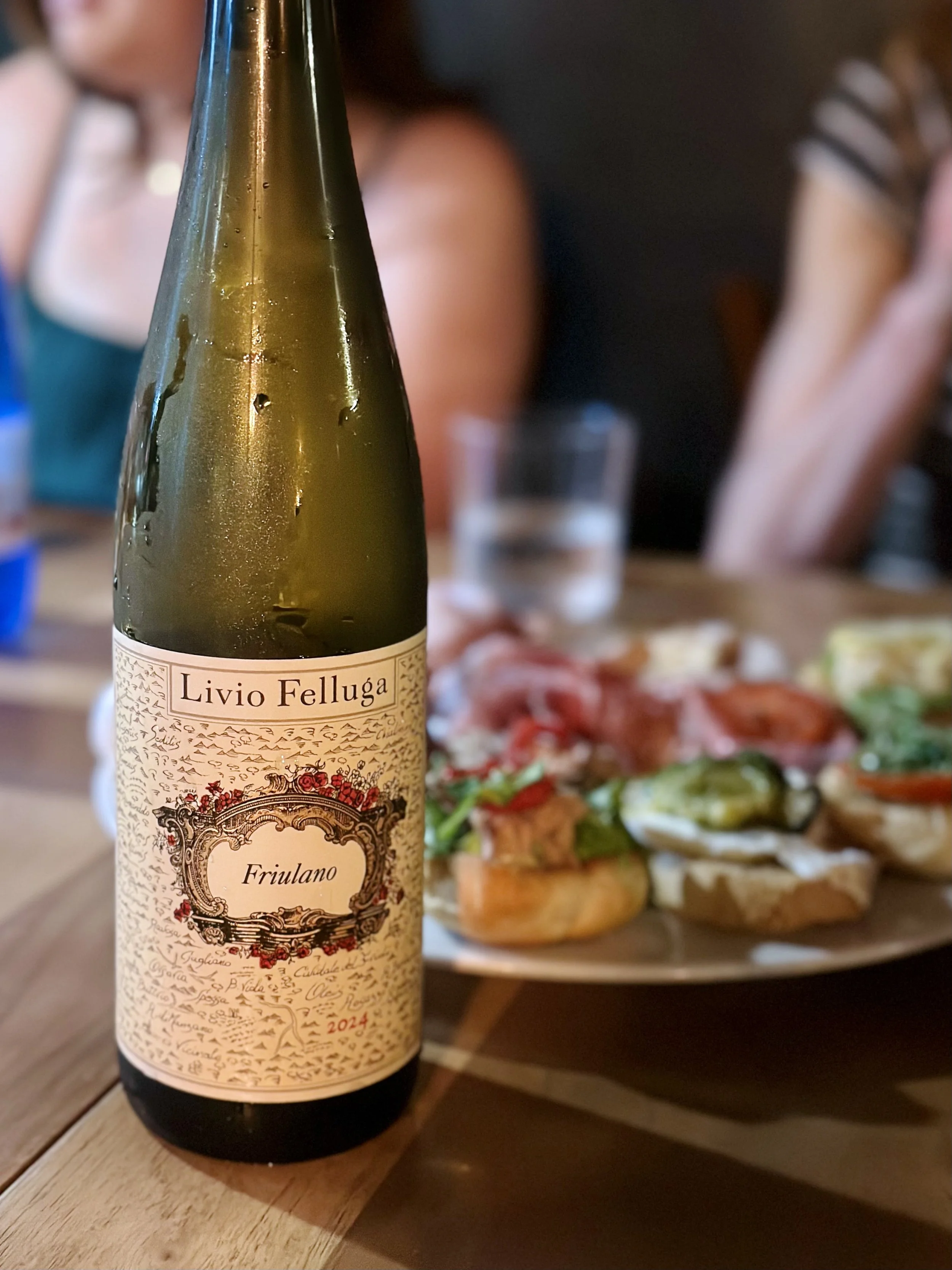
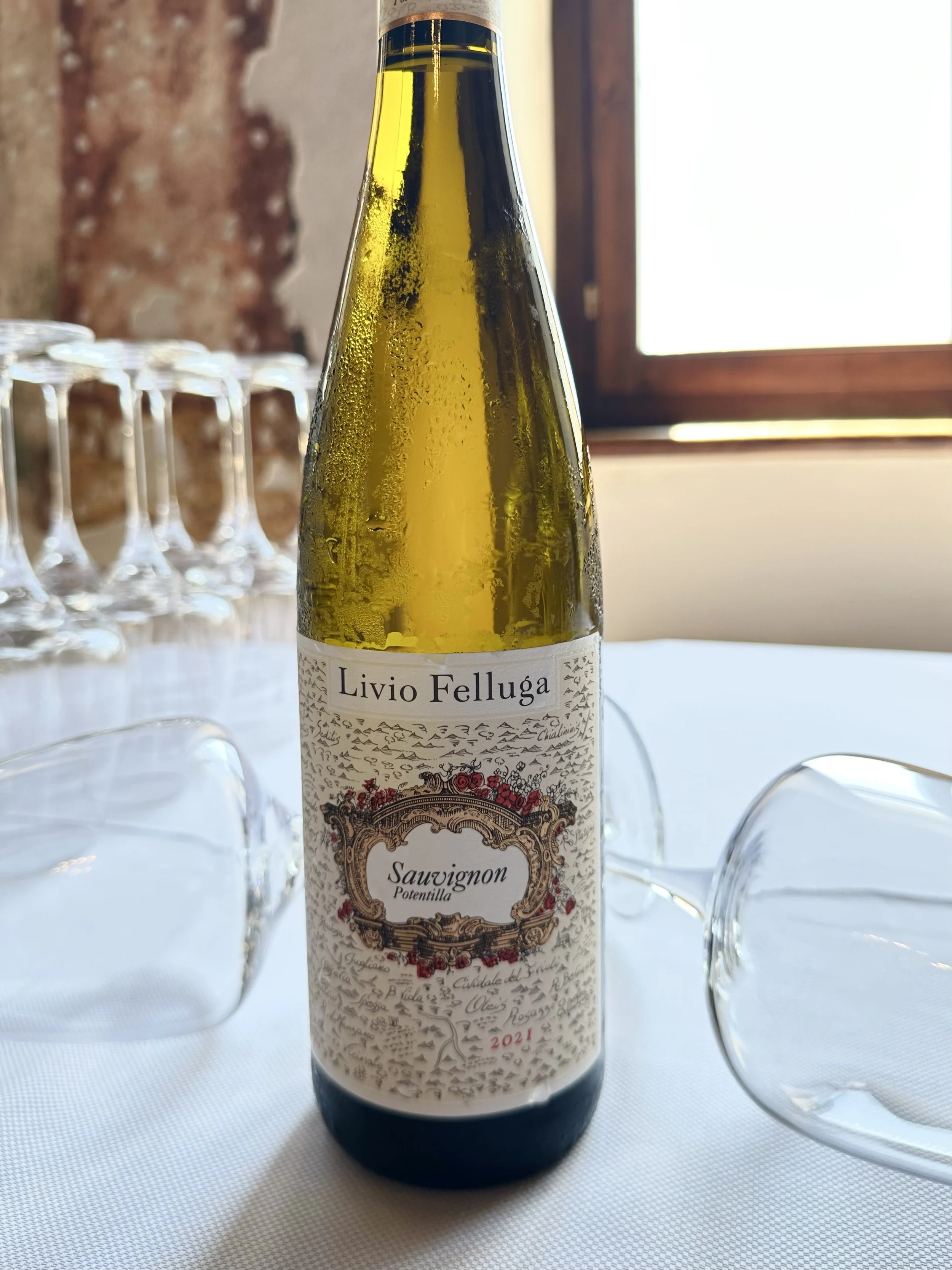
The wider tasting unfolded like a journey through the estate’s many voices. Sharis 2024, Ribolla Gialla 2024, Sauvignon 2024 and Friulano 2024 introduced the freshness and varietal clarity of the classic range. Sauvignon Potentilla 2021 moved into a more site-specific expression, layering guava, passion fruit and grapefruit with herbs and vibrant freshness. Illivio 2023 and the red blend Sossó 2019 broadened the portrait through structure, blending and time.
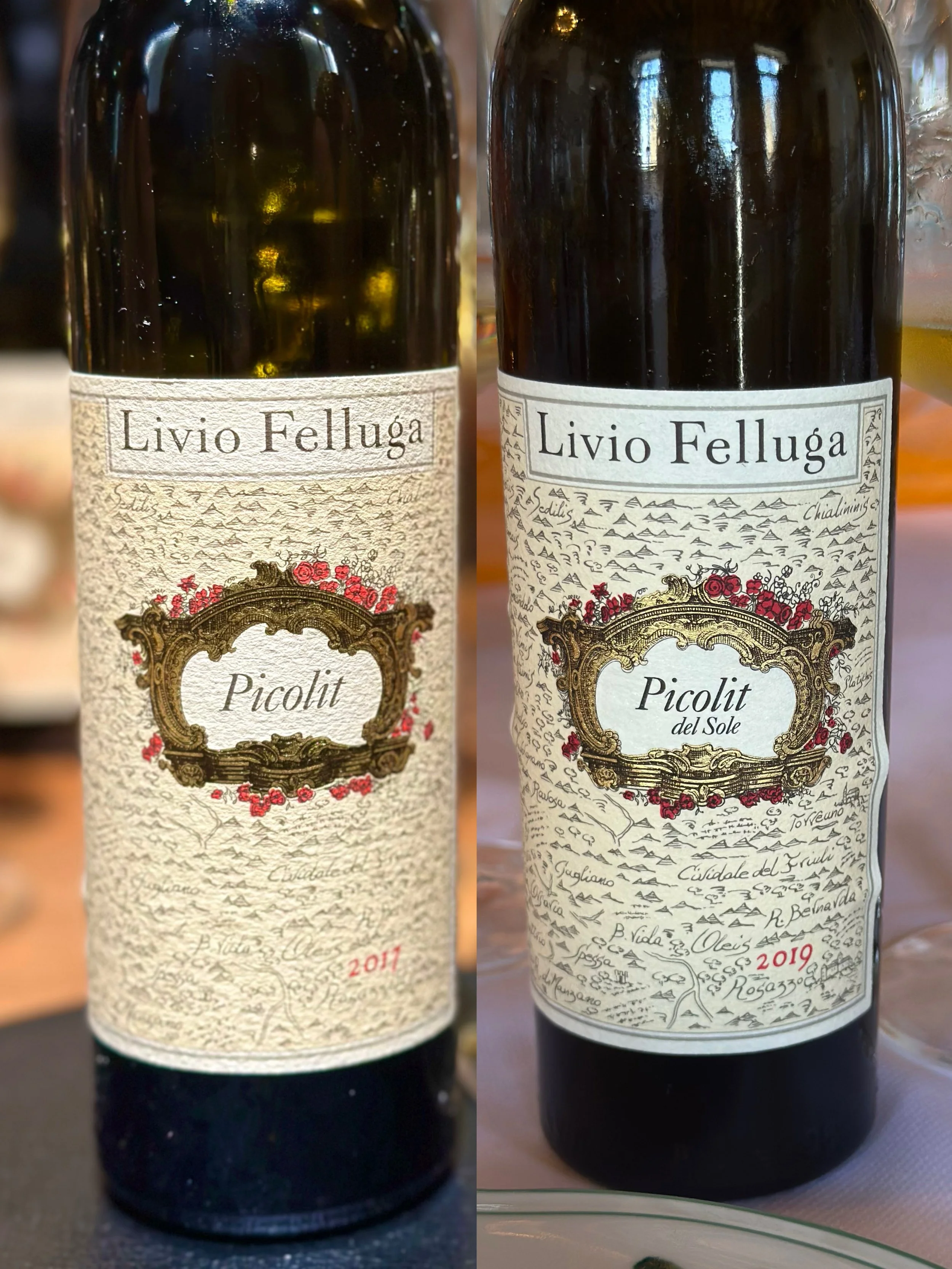
Livio Felluga Picolit and Picolit del Sole | Photo Credit: Joyce Lin
Picolit del Sole 2019 and Picolit 2017 brought the journey to a luminous close. Sweetness of dried apricot, tangerine marmalade and honey flowed into ginger, saffron and clove, held together by the lifted acidity that gives Picolit its grace. Their concentration felt less like weight than like radiance, thanks to their natural production of only a few precious berries per bunch.
Together, these wines showcase Livio Felluga’s identity—spacious enough to include native and international grapes, featuring both youthful freshness and mature complexity, single-variety wines and blends, as well as dry and sweet options. Pinot Grigio remains the most natural first step: familiar enough to welcome the drinker, yet expressive enough to open the door to the wider landscape of Friuli.
A Legacy Carried Forward
Today, generations unite to carry Livio Felluga’s legacy. Andrea leads the estate with a steady sense of purpose; Filippo works closely with the vineyards; and Vittoria, representing the third generation, shares the family’s wines and vision with new audiences around the world.
Livio’s belief in Friuli has become a collective legacy, constantly refreshed by each generation’s knowledge, enthusiasm, and commitment. Throughout the vineyards, cellar, and on every bottle with the map, his original vision remains: to highlight the essence of Rosazzo and the Friuli Colli Orientali hills, sharing their beauty with the world.
This is how a legacy endures. Memory roots it firmly, while curiosity steers it forward. Each vintage adds a new chapter to an ongoing story, influenced by the season, the land, and those responsible for its stewardship.
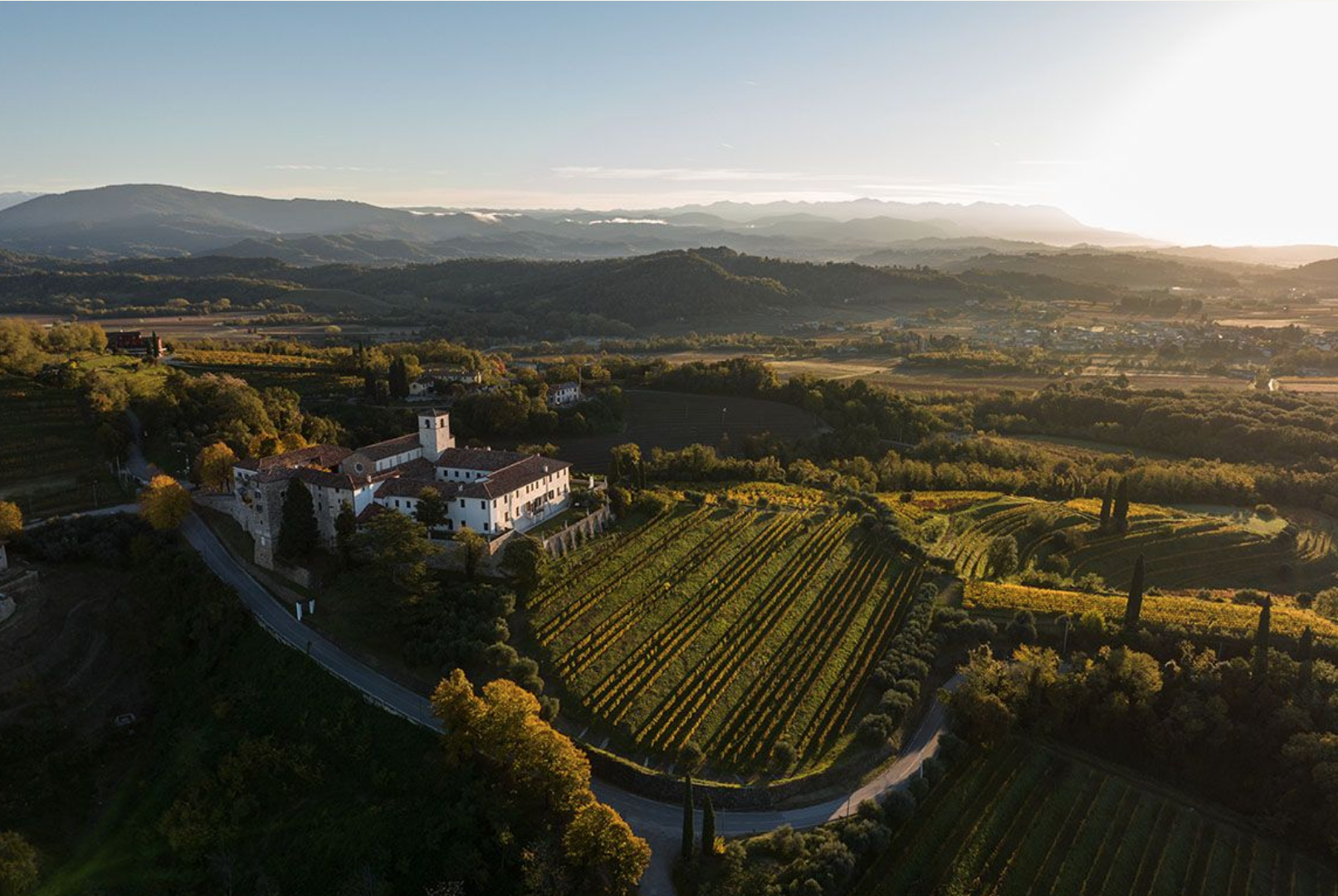
Rossazzo Abbey and surrounding vineyard | Photo Credit: Livio Felluga
Eleven years ago, a glass of Livio Felluga Pinot Grigio opened my eyes to the expressive depth of a familiar grape. In Rosazzo, that initial revelation became complete, showing how one wine can embody ancient soils, generations of expertise, and a deep-rooted connection to its origins.
The map on the bottle gained a new significance. It invites us to explore Friuli more deeply, tracing its rolling hills, listening to the stories told through its vineyards, and appreciating the passion in every glass.
My deepest thanks to Filippo, Vittoria, Daniele Vuerich, and the entire Livio Felluga team for welcoming us with such warmth and generosity. Thank you for sharing your family’s history, guiding us through remarkable wines from vintage to vintage, and allowing us to experience the dedication that sustains this estate. Your work continues to give Friuli a clear, confident voice, rooted in distinctive grapes, living traditions, and a profound connection to the land.
A map can guide us to a destination, while a glass of wine can awaken our senses. The land's story lives on through the dedicated people who tend it, passing down their history and traditions from vintage to vintage, generation to generation.